Should I stay or should I go now?
By Benjamin Marcus · Sat Nov 01 2025
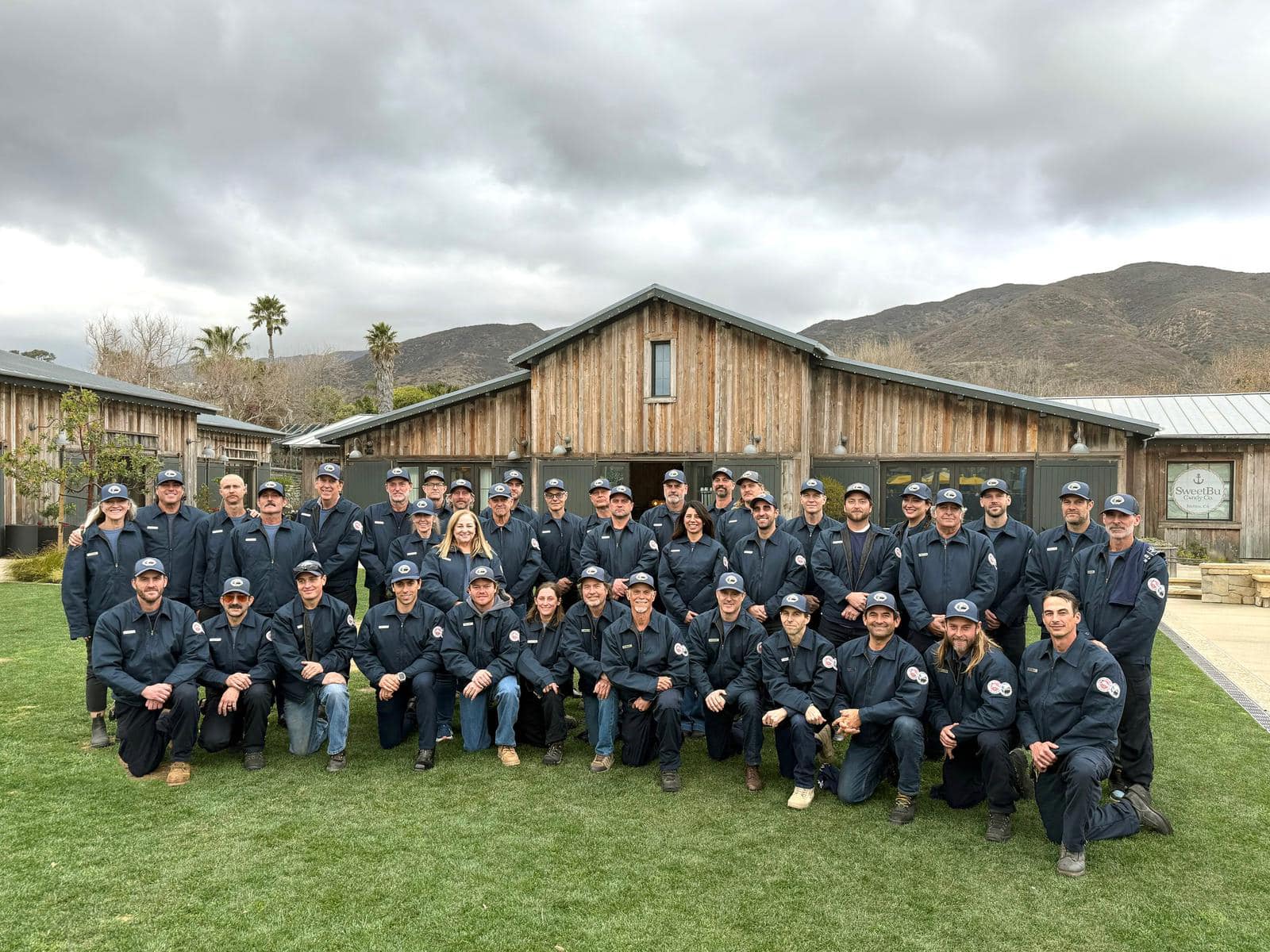
Part Two of Brent Woodworth and the Community Brigade
Should I stay or should I go now?
Should I stay or should I go now?
If I stay there will be trouble…
If I go there will be double.
— "Should I Say or Should I Go" (1981), The Clash
This is Part Two of an interview about the Community Brigade with Brent Woodworth, the chairman and CEO of the Los Angeles Emergency Preparedness Foundation (LAEPF.org). The foundation’s Community Brigade program operates across seven designated high-risk wildfire-exposed communities. In 2024, the Community Brigade responded to the Broad and Franklin Fires, followed by the Palisades Fire in 2025.
There have been choruses of kvetchers complaining about LA County running out of water during the Palisades Fire, but the truth I see is: After 20 minutes, you could have dumped every gallon of water in LA County and it would have made zero difference. Steel bends at 1,000 degrees and the wind was as strong as 80 mph, I believe. Dump water on that and it just evaporates and dissipates. Do you agree?
On Jan. 7, we had the “perfect storm” for a highly destructive, rapidly moving wildfire. Red Flag conditions were elevated to a Particularly Dangerous Situation (PDS) level. The humidity and fuel moisture levels were critical. The Los Angeles County Fire Department deployed all available resources, but there will never be enough fire engines or personnel to protect every home. The canyon winds reached 100-plus mph, and the house-to-house fire conflagration was devastating. With homes burning at such a rapid pace, their water lines ruptured, and fire hydrant pressure dropped. It was a “perfect storm.”
Has the Community Brigade adjusted its strategy to get there as fast as possible with vehicles and douse these things?
The Community Brigade teams serve as a knowledgeable community-based resource in support of the Los Angeles County Fire Department. During the Franklin Fire, we were requested to rapidly deploy our resources to Serra Retreat, where the fire was advancing. Our initial assignment was to evacuate as many individuals as possible. The local knowledge of our Community Brigade members, combined with our deployment tactics and training, was a key contributor to a successful response. This experience led us to increase our focus on working with LACoFD to utilize our local knowledge during evacuation efforts. We also refocused on the benefits of patrolling high-risk areas during Red Flag events with our “Type 6” fire truck assets.
Is that possible? Seems like you would need off-road vehicles and a lot of Local Knowledge about roads, paths, and trails.
Our “Type 6” fire trucks are 4-wheel-drive and appropriately sized for our LACoFD support mission. Local knowledge of roads and access routes is one of the benefits of having resident Community Brigade volunteers on our team. We are familiar with the streets, paths, and routes within many neighborhoods. This knowledge supports evacuation efforts and the specific tasks assigned to our team during an event. In some neighborhoods, we have worked with residents and mapping specialists to identify routes that were not always mapped but could provide access during a crisis.
You said you live above Camp 8 and I have a question about Camp 8: A friend who was an LA County firefighter for many years broke down why the Palisades fire went out of control. He said LA City is "macho" and tried to handle it on their own. A guy who works with Cal Fire said they should have called “Broken Arrow” and sent in everyone, available all at once.
LACOFD Camp 8 is about six miles as the Sikorski flies from Skull Rock Trail Head, and I wonder if there were Firehawk (1,000 gallons) or Chinook (3,000 gallons) or other helicopters prepped and loaded and ready to go at Camp 8 when the fire broke out? They could have been there in less than 10 minutes I think — and put enough water on that “loom up” to douse it before it went out of control. Because as I’ve been told, firefighters have about 20 minutes and five acres to get on top of a wind-blown fire, and after that, it's out of control. Do you agree with that?
Fire Camp 8 and 69 Bravo represent some of the finest brush crew and Helispot support resources in LACoFD. There are several instances in which the proximity of 69 Bravo, as a water refilling station, enabled LACoFD air resources to respond to and suppress local fires rapidly.
You are correct in observing that once a fire reaches 5 acres during a Red Flag/Particularly Dangerous Situation (PDS) with high Santa Ana wind conditions, it is improbable that its progression can be stopped. If a wildland fire in these extreme conditions exceeds 5 acres, the Pacific Ocean will likely serve as the primary firebreak.
Bobby Millstein of SoCal Fire Supply said: “I believe people need to take ownership of the risk of wildfire when choosing to live in the Santa Monica Mountains, adjacent communities, or any other Wildlife Urban Interface, as the local infrastructure and response can not be counted on in a large-scale wildfire or any other catastrophic disaster. By taking ownership, they need to harden their homes and mitigate hazardous ornamental and natural vegetation.” Do you agree with that?
Residents living in high- and very-high-fire-danger areas need to take responsibility for implementing prudent, proven measures to reduce the risk of their homes igniting. These actions start with following the guidance for home hardening provided by LACoFD and Cal Fire. We encourage homeowners to have their property inspected for home ignition zone hazards. In many cases, mitigation actions can be addressed at a reasonable cost. Residents of the City of Malibu have access to free home wildfire assessments via the City’s Fire Safety Liaisons. The Community Brigade also has a Home Ignition Zone Assessment program that can be found on our website: communitybrigade.org
Haylynn Conrad asked: “What will they do with the Franklin burn scar?”
The Franklin Fire burn scar was a key contributor in preventing the Palisades Fire from advancing up the coast towards Ventura County. The Franklin Fire burn scar eliminated the fuel needed for the Palisades Fire to continue its path towards Ventura. Without the Franklin Fire burn scar, the fire could have progressed to Point Mugu or beyond.
If not for Sweetwater Mesa, the Palisades Fire could have roared all the way to Dume and maybe beyond. The wind was howling that night, not out to sea but straight west along Malibu Road. Sweetwater Mesa stopped it, and The Edge from U2 should be glad he wasn’t allowed to build his five homes along there because they would have been toast.
We know that firebreaks (prescribed burns) can effectively slow the spread of a fire, allowing available firefighting resources to help stop its forward progress. This was the case with the Franklin Fire, which acted as a firebreak, slowing the Palisades Fire.
The Edge, from U2, has interfaced with members of our team and is a strong supporter and advocate of wildfire preparedness and resiliency efforts, including the Community Brigade program. We greatly appreciate his support and understanding of the challenges faced.
Another question from a concerned citizen has to do with the Malibu fire warning system: “Ask him what alerts we should be using for evacuations? Do they have a favored radio system? Or something that has been successful? The city can push out every alert on the planet, but in a PSPS if no one gets it they are useless. Would they be in favor of old school outdoor fire sirens?”
Southern California Edison has indicated that Public Safety Power Shutoff (PSPS) events will continue. Residents living in the local high or very-high fire risk areas should sign up for alert notifications with the City of Malibu and the County of Los Angeles. Installing apps such as “PulsePoint” and “Watch Duty” can provide valuable information during a fire. In addition, we recommend listening to local 99.1 KBUU radio and/or KNX New Radio (97.1 FM) in your car, or (old school — battery-powered transistor radio — now you know how old I am). The City of Malibu is also exploring sirens to determine if they are an appropriate and/or effective consideration for Malibu.
Local Alert Notification Signup: MalibuCity.org/DisasterNotification ready.lacounty.gov/emergency-notifications/
The fire situation in Malibu can now be summed up by the Clash song "Should I Stay or Should I Go?" It is dangerous for civilians to stay behind and fight a firestorm, but they do so, knowing that if they lose their house, they're looking at a multi-year, multimillion-dollar nightmare to rebuild. Zuma Jay nearly died defending his house during the Woolsey Fire, while Laird Hamilton and a friend successfully defended their house up Latigo, then got out while the getting was good — taking videos of a Hellish firescape on the way out. More houses have been saved than lives lost.
A resident of Carbon Canyon asks: “Q#1 Please ask them if there is any way a few passes can be given out to individuals who have previously stayed behind during the past few fires.”
Tragically, during the Palisades and Eaton fires, 31 individuals lost their lives. Life/safety should always be your No. 1 priority. A past experience with a positive outcome using poor tactics does not mean you will have the same result using similar tactics in the future. Wildfires are extremely dangerous, with rapidly shifting patterns impacted by fuel, wind, and topography. You do not want to burn to death. Your life and your family members' lives are your most precious assets. We want you to be safe. Using a garden hose to wet down a “Class A” (required in California) roof that won’t burn is not a winning strategy. We are your neighbors, we are your community, and we care about you.
There are no temporary passes for individuals who have previously stayed behind.
Q#2 These individuals are fully equipped with all their own gear and have an understanding of the topography of their neighborhood, and have studied winds. Anonymously these are the individuals who are equipped and willing to save their neighborhoods to save themselves from the havoc of the destruction and aftermath of rebuilding their home and life. Does the Community Brigade have an official recommendation for citizens who choose to stay behind and defend their houses?
The Community Brigade does not recommend remaining behind when evacuation warnings and orders have been issued. We strongly recommend taking action to reduce your risk of loss by identifying and mitigating wildfire risk exposures (hardening your home). A 2025 study on major California wildfires found that a combination of home hardening and vegetation management (reducing fuel) around the home can reduce loss exposure from fire by 48% to 52%.
We understand the desire to “stay and defend,” but we also know the overwhelming risks involved. Follow the lead of our Community Brigade members by hardening your home, encouraging your neighbors to do the same, and taking time to get to know your local Community Brigade.
Do you have recommendations for equipment? Water supply? Communications? Backup power? Manpower? Strategy?
When preparing, we encourage you to follow the LACoFD — Ready, Set, Go program and to have a plan. A few actions to consider:
- Review your insurance coverage (have you actually read your policy?)
- Photograph or video the interior of your house, including items in closets, to create an accurate record of your possessions.
- Preplan which items you will be taking with you: essential papers, photos, and items that cannot be easily replaced but still fit in your car.
- Create a “Go Bag” that includes a change of clothes, medicine, snacks, water, a battery-powered radio, and a flashlight. Don’t forget about your pets.
- Identify in advance where you will be traveling to (evacuation route alternatives and location). And bring some extra snacks and water in your car.
- Develop a communication plan for family members, including a designated meeting place.
- Listen to the radio or apps for evacuation warnings and orders, and follow them. Do not wait for the fire to be in direct proximity to your home. (Note: A Shelter in Place order is a last resort if the fire is moving so rapidly that you cannot safely evacuate.)
- Do a rapid triage assessment around your home before leaving. Move flammable objects (for example, furniture cushions) inside or drop them in your pool (if you have one). Move plastic trash cans away from the house and open any wooden gates that could carry fire to your home.
Is there any way there could be a Citizen's Training that would license people to stay behind if they were adequately trained and equipped?
The Community Brigade does not have a program that would qualify or license any individual to stay behind. Several programs train homeowners and community members to serve their communities during a fire or other natural disaster. These programs include (but are not limited to) the local Community Emergency Response Team (CERT), Arson Watch, and the Sheriff’s Disaster Communication Service program.
The community math used to be: A firestorm every 10 years, then it was shrunk to every five years and now it seems like it could be every year. When the wind blows will there always be a fire?
Fire is not going away. And we can find ways to live effectively with this reality by shifting from fire suppression to fire adaptation, using strategic management practices to build fire-resilient communities that can coexist with, rather than simply fight against, this natural force. Understand the risks and don’t be shy about learning how to address them.
Your donation to the Community Brigade empowers us to continue providing immediate and long-term support, directly transforming the lives of our neighbors in their greatest time of need.
For more information visit CommunityBrigade.org.