Malibu council pulls the plug on PCH Roundabout Project
By Hayley Mattson · Wed Aug 12 2026
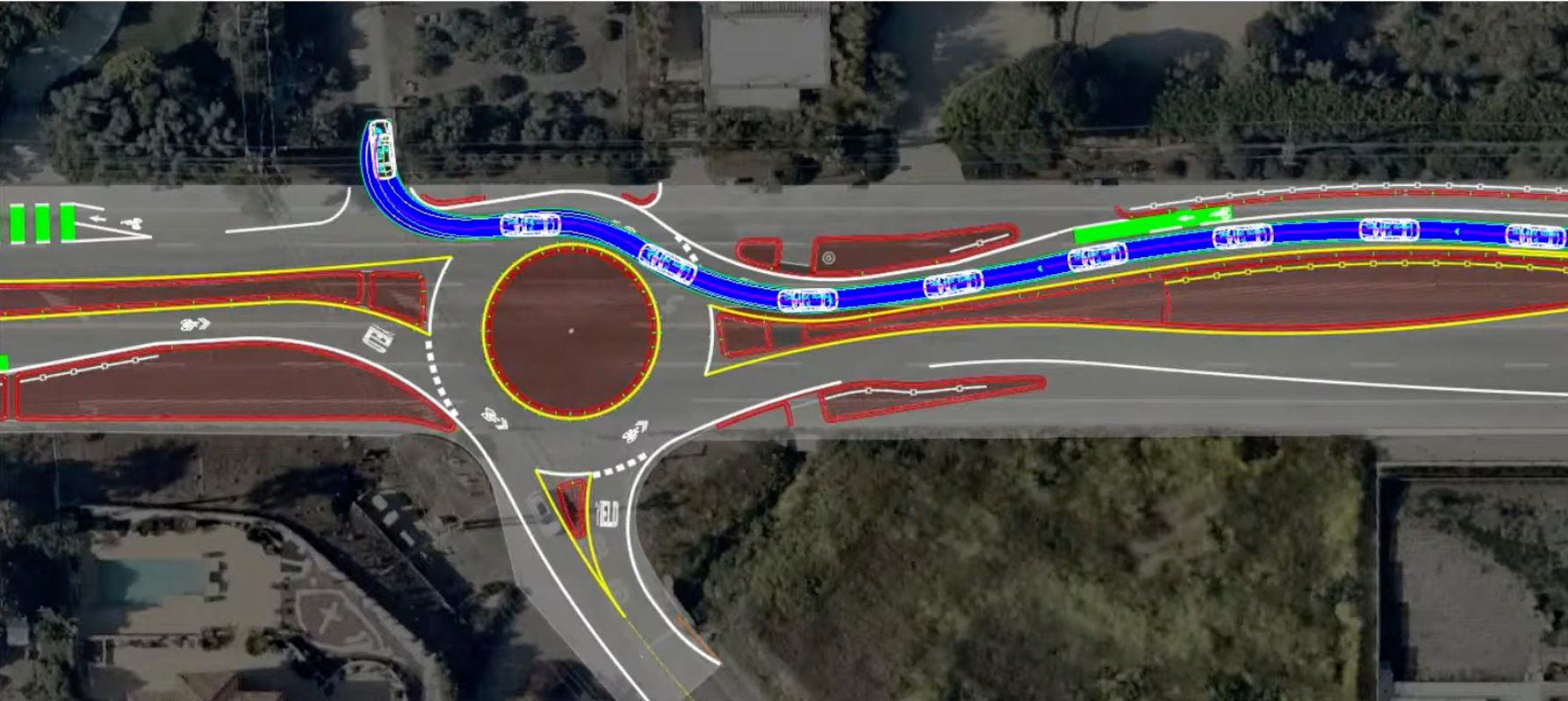
Council unanimously ends proposed western Malibu pilot after evacuation study, funding complications and concerns that the roundabouts were planned for the wrong location
On Monday, the Malibu City Council unanimously denied the controversial Quick-Build Roundabouts project proposed for western Pacific Coast Highway, directing city staff to withdraw from the project, remove it from the city’s Capital Improvement Program, and seek reimbursement for eligible costs already spent.
The Aug. 10 decision followed another lengthy discussion over the proposed roundabouts, including new wildfire evacuation modeling, vehicle simulations and the revelation that $2 million in Measure M funding allocated to the project could not be used if the city intended from the outset to remove the roundabouts after a temporary trial period.
While council members ultimately agreed the proposed locations were wrong, several stressed that Monday's decision should not be interpreted as a rejection of roundabouts as a potential safety tool elsewhere on PCH.
“I’m not anti-roundabout,” Councilmember Haylynn Conrad said. “I think I’m just anti these — this round, this project.”
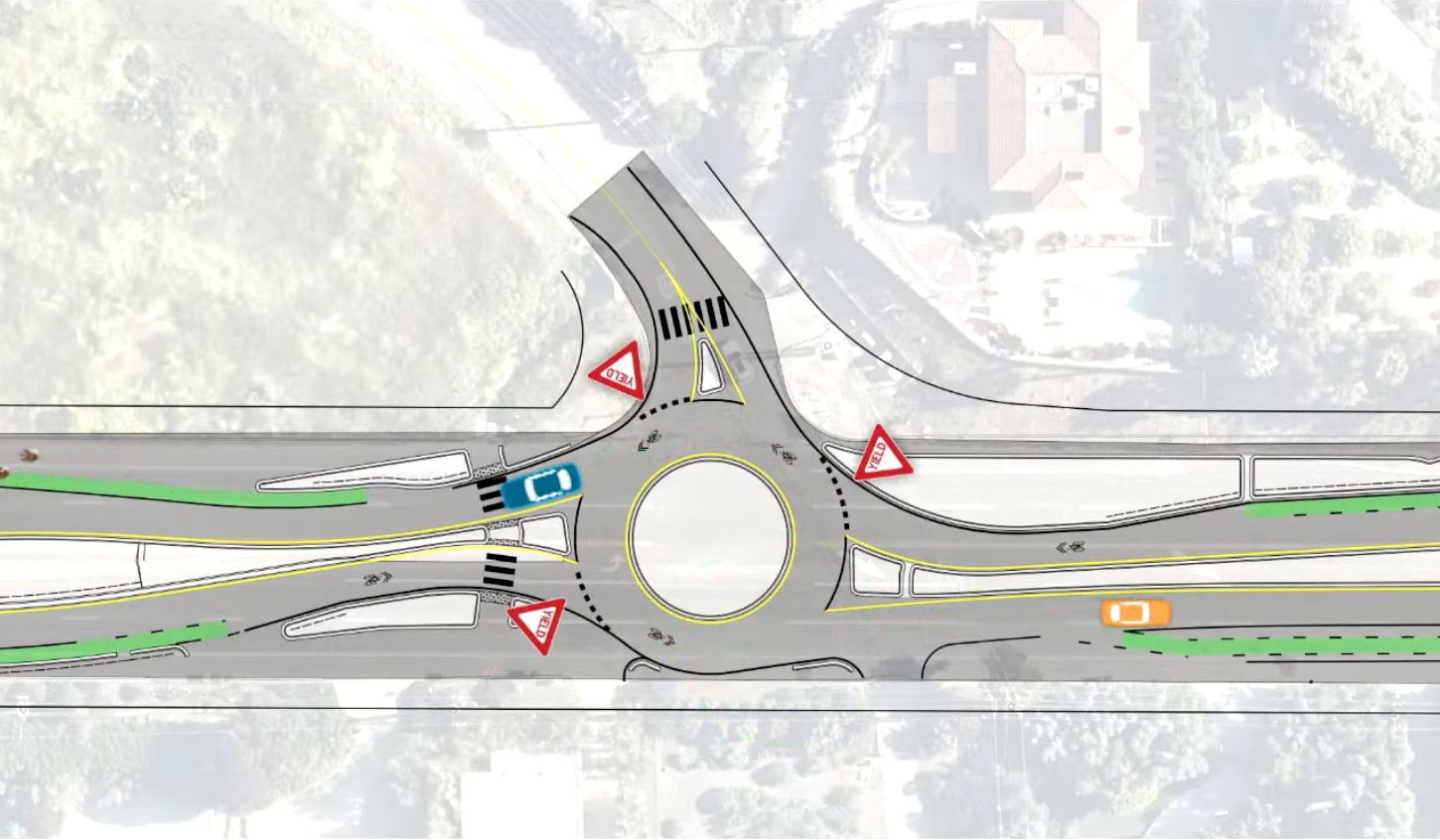
The Quick Build Roundabouts project emerged from Malibu's efforts to reduce dangerous speeds on PCH following the October 2023 deaths of four Pepperdine University students.
In January 2024, the council directed staff to pursue rapidly deployable safety improvements along the highway. Working with Caltrans and Los Angeles County Supervisor Lindsey Horvath's office, officials eventually focused on roundabouts in western Malibu.
In February 2025, Metro approved a $2 million allocation for the design and construction of quick-build roundabouts using funding provided through Horvath's office.
The proposal subsequently moved through community workshops, the Public Works Commission, Planning Commission, City Council and California Coastal Commission.
The primary objective was to reduce vehicle speeds along the corridor and create conditions that could allow Malibu to legally lower the enforceable speed limit.
But the project faced significant opposition from western Malibu residents, particularly over evacuation concerns and whether the roundabouts were needed in the proposed locations.
At the council's request, staff conducted a wildfire evacuation analysis designed to stress-test PCH with and without the roundabouts.
The model used the Woolsey Fire as its scenario and incorporated evacuation zones extending beyond Malibu because residents from surrounding areas could also be expected to reach PCH during a major wildfire.
The study identified 5,871 households potentially evacuating through the modeled area, translating to an estimated 11,886 vehicles.
Using the Woolsey Fire timeline, evacuation notices were modeled as beginning at 7 a.m., with departures increasing throughout the morning, peaking around 11 a.m. and the final evacuees beginning their trips at approximately 3 p.m.
Under existing conditions without the roundabouts, the model estimated it would take approximately 16 hours and 58 minutes to completely clear the evacuation population, with evacuees considered clear once they reached the Point Mugu area in Ventura County.
With the roundabouts, the estimated systemwide clearance time increased to 17 hours and 12 minutes — a difference of approximately 14 minutes.
Staff also modeled how long individual residents could spend evacuating.
Depending on departure time, the evacuation could take as little as approximately 52 minutes or as long as nine hours and 42 minutes during peak congestion. The average modeled evacuation time under existing conditions was approximately four hours and 36 minutes.
With the roundabouts, those individual evacuation times increased by less than 30 seconds, according to the presentation.
The study produced a different result for Encinal Canyon.
Approximately 450 households, representing an estimated 943 vehicles, were modeled as using Encinal Canyon during an evacuation. Staff said the roundabouts actually reduced the area's clearance time because they created breaks in PCH traffic that allowed vehicles to enter the highway from Encinal Canyon.
The average evacuation time for an Encinal Canyon resident was reduced by approximately two minutes under the roundabout scenario.
Councilmember Marianne Riggins said the simulation offered a lesson extending well beyond the roundabout debate: Malibu residents need to evacuate early when wildfire threatens.
“I think that we should also keep that evacuation video so people understand why it's important to evacuate early,” Riggins said.
She compared her own experience evacuating during the Woolsey Fire with the dramatic congestion illustrated by the city's model.
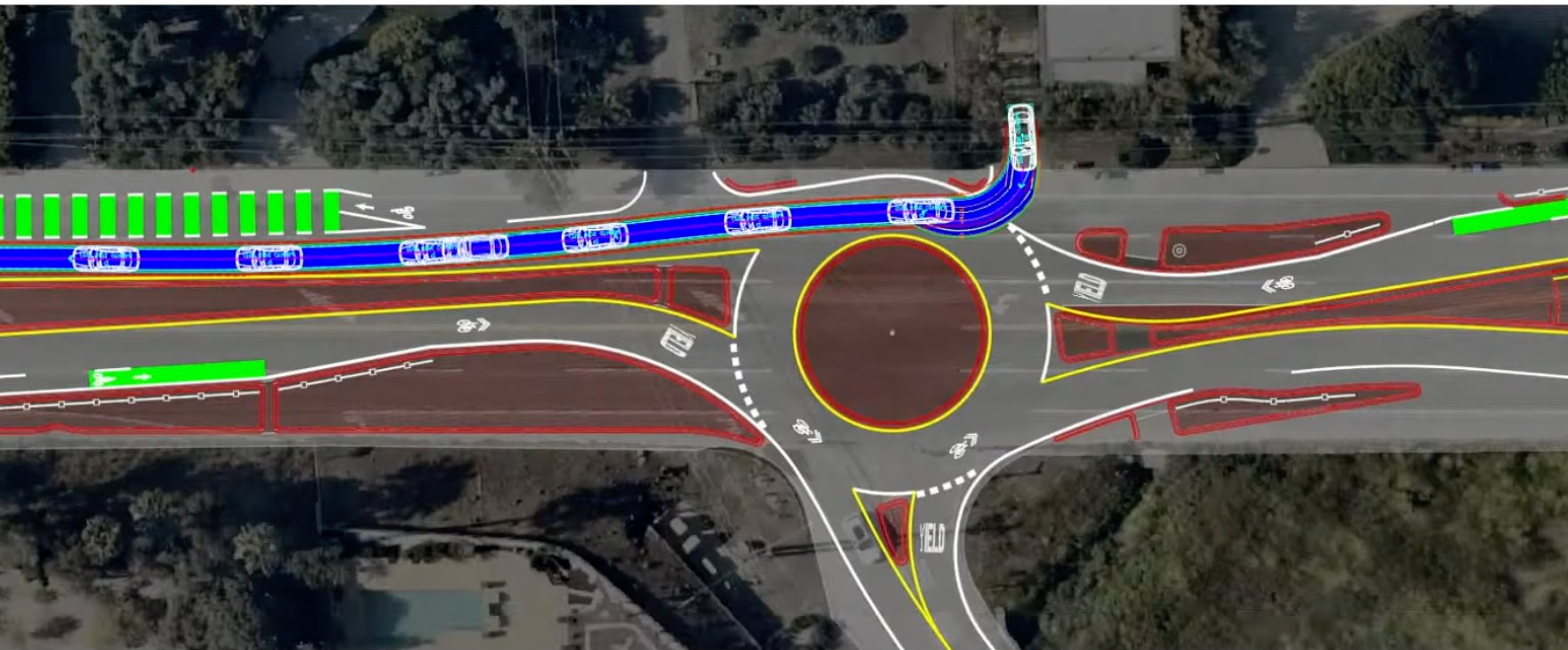
$2 million funding hits unexpected complication
The evacuation analysis was not the only new information confronting the council.
Staff reported that the city had learned the $2 million in Measure M funding could not be used to construct a project if Malibu intended from the outset to remove it after a defined trial period.
The distinction became important because the roundabouts had repeatedly been discussed as a pilot project that could be evaluated and potentially removed if they proved unsuccessful.
Staff explained that “quick build” does not necessarily mean temporary. Under the state's definition, a quick-build project can serve as an interim improvement but can also remain indefinitely.
Measure M funds, however, cannot be spent on a project constructed with the predetermined intention of later removing it.
That left the council with three basic options.
Malibu could proceed with a temporary project intended for removal after approximately 15 months, but constructionwould have to be funded from the city's General Fund rather than the $2 million Measure M allocation.
The city could instead proceed with roundabouts intended to remain indefinitely, allowing it to use Measure M funding. That option would require design revisions, a new Caltrans permit and amendments to the Coastal Development Permit, potentially delaying the project by at least 12 months and possibly pushing costs above $2 million.
The third option was to withdraw from the remaining project, remove it from the Capital Improvement Program and seek reimbursement for eligible expenses already incurred.
The council chose the third.
Staff said design work already completed by consultant Kimley-Horn should remain eligible for reimbursement because designing quick-build roundabouts was consistent with the approved Measure M scope.
Council: Right idea, wrong location
Much of the council's deliberation focused less on whether roundabouts can improve traffic safety and more on whether western Malibu was the appropriate location to test them.
Mayor Bruce Silverstein said the larger issue is Malibu's long-running effort to transform portions of PCH from a high-speed highway into more of a community boulevard.
The roundabout experiment, he said, could potentially have demonstrated whether reducing PCH to one lane in each direction would cause motorists to drive closer to a reduced speed limit.
Silverstein acknowledged the argument from residents that the roundabouts addressed a problem that did not exist at the proposed location.
But he suggested the underlying experiment was intended to answer a broader question about the future configuration of PCH.
“The problem has nothing to do with where it's being placed,” Silverstein said. “The problem is, we need to prove that if there's one lane in each direction on PCH, cars will go closer to the speed limit.”
Silverstein said he could not support spending city General Fund money to continue the current proposal.
He suggested the concept might have greater value if tested in an area where traffic safety improvements are already needed, mentioning a stretch near Trancas, Busch Drive or Bonsall Drive as possibilities.
Conrad similarly said she supports the broader boulevard concept and is not opposed to roundabouts but could not support the project in its proposed location.
She said the lengthy process nevertheless provided Malibu with valuable information about evacuation, roadway design and how future roundabouts should be considered.
“We've learned a lot from this exercise,” Conrad said.
Councilmember Doug Stewart also acknowledged that he had initially been attracted to the idea of testing roundabouts as a way to make PCH safer.
He noted that traffic signals can create their own collision risks and that Caltrans has increasingly considered roundabouts as a safety tool.
“Don't kick us because we try to be innovative,” Stewart said.
But after visiting the proposed location and looking more closely at the roadway, Stewart said he concluded the project simply did not fit there.
“The problem I'm having is this is the wrong place to stick this thing, to try it out,” Stewart said.
He said the experience should not lead Malibu to conclude that roundabouts themselves cannot work.
Instead, the city should identify locations where a roundabout addresses an existing safety or traffic problem rather than selecting a location primarily because it is physically convenient for an experiment.
“This is a duck that needs to be put away and forget about it,” Stewart said. “Come back to someplace else with a smarter presentation, smart place to do it.”
Mayor Pro Tem Steve Uhring said he had opposed the proposal previously and remained opposed, particularly after what had been envisioned as a temporary test became complicated by requirements tied to permanent improvements and funding.
Uhring also praised the evacuation modeling, comparing the challenge of evacuating Malibu to “trying to drain a pool with a garden hose.”
Council votes to end project
As the discussion concluded, Riggins asked for a motion that would ensure the existing western Malibu proposal did not simply remain paused and return before a future council.
Staff clarified that the council could direct the city to withdraw from the remaining project scope, seek reimbursement for eligible expenses and remove the project from the Capital Improvement Program.
A motion was made to do exactly that and seconded.
Before the vote, Silverstein asked whether there was interest in directing staff to explore moving the two roundabouts to another Malibu location where they might address an existing safety problem while also testing the effect of reducing PCH to one lane in each direction.
Bundy cautioned that relocating the project would not be as simple as moving the existing designs. A different location would essentially require a new project with different design parameters.
She also noted that a separate Busch Drive roundabout project is already among the city's planned PCH improvements and is expected to come before the council as part of a cooperative agreement with Caltrans.
Council members agreed that potential future roundabouts could be discussed separately as part of the city's broader capital improvement planning.
The council then voted unanimously to end the current project.