Malibu Council confronts leadership, PCH safety, and rebuild delays
By Hayley Mattson · Thu Oct 30 2025
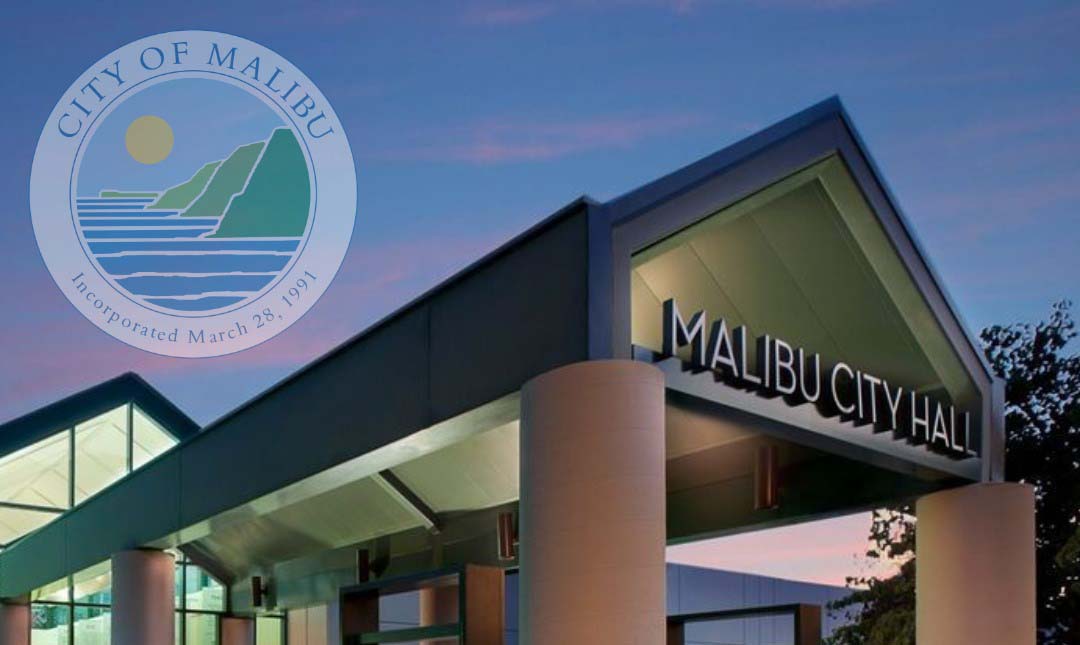
Residents and councilmembers urged action on post-fire recovery, coastal risks, and a pending luxury motel conversion during another marathon meeting
In a marathon seven-hour session that stretched past 11 p.m. Monday, the Malibu City Council wrestled with a series of urgent and complex issues — from leadership instability and Pacific Coast Highway (PCH) fatalities to coastal vulnerability and post-fire rebuilding. The meeting, held at City Hall and streamed on Zoom, featured emotional public testimony, the introduction of a new deputy city manager, approval of key safety enhancements, and a contentious debate over a proposed zoning change for a beachfront inn. Yet by night’s end, residents’ greatest concern — the city’s lack of permanent leadership — remained unresolved.
Public comment set the tone for the evening as residents voiced frustration over Malibu’s uncertain leadership. Lifelong resident Megan Lorick, speaking on behalf of several community members, urged the council to prioritize hiring a permanent city manager. “Candace Bond has stepped in admirably as interim,” Lorick said, “but this time of crisis requires consistent, permanent leadership.” She cited challenges ranging from post-fire rebuilding to PCH safety, homelessness, and tourism pressures, warning that reliance on councilmembers as de facto managers was “unsustainable.” Lorick also presented research comparing Malibu’s options to other coastal cities, advocating for applicant Glenn Bacerra to be interviewed for the role — a suggestion that revealed divisions among councilmembers.
After a brief closed session with no reportable action, the meeting opened with an emotional adjournment in memory of entertainment lawyer Barry Haldeman and San Bernardino County Sheriff’s Deputy Andrew Nunez, who was killed in the line of duty earlier that day. The consent calendar passed with minimal debate, allocating $1.6 million in Measure M funds for PCH signal synchronization and speed-adaptive cameras — a move widely supported as Malibu faces a rising toll of traffic deaths. Councilmember Bruce Silverstein raised concerns about vulnerabilities in the city’s bidding process, but staff defended their procedures.
Interim City Manager Bond introduced Malibu’s new Deputy City Manager, Frances Arricale — a former Malibu resident with an extensive background in government operations. Bond’s city update touched on election logistics, highway safety coordination with Caltrans, and progress on rebuilding after the Palisades Fire. She praised Community Development Director Yolanda Bundy for being named the 2025 International Code Council Official of the Year and noted that seven rebuild permits had been issued, with nine more expected soon. Bond also announced the launch of Archistar, an AI-powered permitting tool designed to streamline reviews and speed up rebuild approvals.
Sheriff’s Sgt. Chris Soderlund reported a 42.7% decrease in Part 1 crimes compared to last year, while MRCA Ranger Tim detailed park safety improvements — including 263 parking citations issued, 3,619 pounds of trash collected, and enhanced red-flag staffing during high fire risk days. Councilmembers shared appreciation for Malibu’s new park closure policy during high-risk fire weather but criticized state and national parks for lagging behind on similar measures.
Public comments revealed deep frustration among residents over what many see as stalled progress. Jason Riddick accused the Broad Beach Geological Hazard Abatement District of overreach; Kevin Keegan marked the 100th day since Mayor Pro Tem Silverstein introduced his rebuild plan and demanded tangible results. Malibu High sophomore Parker Kaplan urged the city to make PCH safer for young pedestrians and cyclists, calling the highway “a divider for teens.” Several speakers advocated for faster rebuild approvals and praised staff’s recent improvements, while others urged stronger enforcement against illegal short-term rentals.
In a brief but emotional moment, the council voted to establish a new Surf Legend of the Year award to honor Randall “Crawdaddy” Miod, a beloved local who lost his life defending his home during the Palisades Fire. The recognition will be part of Malibu’s annual awards program.
Environmental concerns took center stage as the council reviewed the city’s long-awaited Coastal Vulnerability Assessment (CVA). The report, presented by City of Malibu Environmental Sustainability Analyst Farah Stack, who joined the city team in September, and hydrologist James Jackson of Environmental Science Associates (ESA), paints a sobering picture of Malibu’s 21-mile coastline under the pressures of sea level rise. Using U.S. Geological Survey COSMOS hazard models, the study projected impacts under scenarios of 2.5 and 6.6 feet of sea level rise by 2100 — including bluff erosion, tidal inundation, and wave run-up threatening homes, septic systems, businesses, and PCH itself.
“This study doesn’t predict the future,” Jackson explained, “but it shows what could happen if we take no protective action.” The findings assume no seawalls or other interventions to illustrate the worst-case scenario. While the CVA does not yet prescribe specific adaptations, it outlines a “menu” of potential solutions, from nature-based dune restoration to structural reinforcement and elevation of buildings.
Councilmembers emphasized the urgency of safeguarding PCH — the city’s lifeline — from erosion and flooding. “If we lose PCH, we’re in deep trouble,” one warned, calling for collaboration with Caltrans and state agencies. The city plans to develop a comprehensive adaptation plan by 2026, pursue grant funding for pilot projects like beach nourishment or offshore reefs, and launch public engagement on climate resilience. An interactive online hazard map is already available for residents and advocates.
In its final discussion of the night, the council took up a contentious zoning proposal that would permit the transformation of the former Tide Pool Health Club and (formerly Casa Malibu) Motel into a unified 17-room luxury bed-and-breakfast inn at 22752–22762 Pacific Coast Highway. Contract planner Joseph Smith presented the nine-part legislative package, including amendments to the General Plan, Zoning Map, and Local Coastal Program, as well as a Coastal Development Permit and Conditional Use Permit.
The proposal, which involves no new construction, will repurpose the existing pool, gym, kitchen, and deck for guests only. The two parcels will be rezoned from Community Commercial (CC) to Visitor-Serving Commercial (CV-1), which allows smaller-scale lodging but not hotels. Alcohol service will extend to the entire site, limited to minibars and on-site consumption.
To comply with the city’s low-cost accommodation policy, the applicant agreed to pay $22,350 in in-lieu fees — and later voluntarily added a $2,022,350 contribution to the same fund, significantly exceeding the requirement. The council also directed that any additional Coastal Commission fees be retained by the City of Malibu to support local visitor-serving initiatives.
Following community concerns about noise, trash collection, and public access, the council adopted 44 staff-recommended conditions with several new restrictions: a complete ban on live entertainment and special events (including filming), limits on trash collection hours between 9 p.m. and 7 a.m., and mandatory neighborhood notification before sound system testing. Councilmembers cited prior noise issues at Soho House as justification for stronger enforcement measures.
A key debate centered on whether the pool, approved in 2015 for private use, should be opened to the public. Staff clarified that the Local Implementation Plan does not require public access for motel pools, and the council agreed, citing consistency with similar coastal inns.
Ultimately, the zoning change passed unanimously on first reading. The ordinance will return for a second reading on Nov. 10 before heading to the California Coastal Commission for certification. If approved, the redevelopment will create a small-scale, visitor-serving coastal inn — a model the council hopes will strike a balance between tourism and community impact.
Additionally, the council filled two vacancies on the Mobile Home Park Rent Stabilization Commission, appointing Scott Bloom and Sam Hankman—confirming Hankman’s eligibility under city rules despite being the son of a current commissioner. Councilmember Silverstein reiterated his support for Archer Star as a voluntary tool but urged caution regarding data privacy. He and Councilmember Haylynn Conrad plan to bring forward a December proposal to institutionalize rebuild efficiencies and possibly reinstate a “rebuild ambassador” program to assist homeowners. Councilmember Steve Uhring praised staff’s progress compared to Los Angeles County’s rebuild process, setting an ambitious goal of issuing 100 permits by year-end.
As Malibu continues navigating its dual identity — a small, tight-knit community with global visibility — the tension between progress and preservation remains palpable. The city’s leadership vacuum, ongoing fire recovery, and environmental threats underscore the challenges ahead. Still, Monday’s meeting reflected both the community’s frustration and its enduring resilience.
The next Malibu City Council meeting is scheduled for Nov. 10.