Twenty-five years later, America remembers Sept. 11
By Hayley Mattson · Sat Sep 19 2026
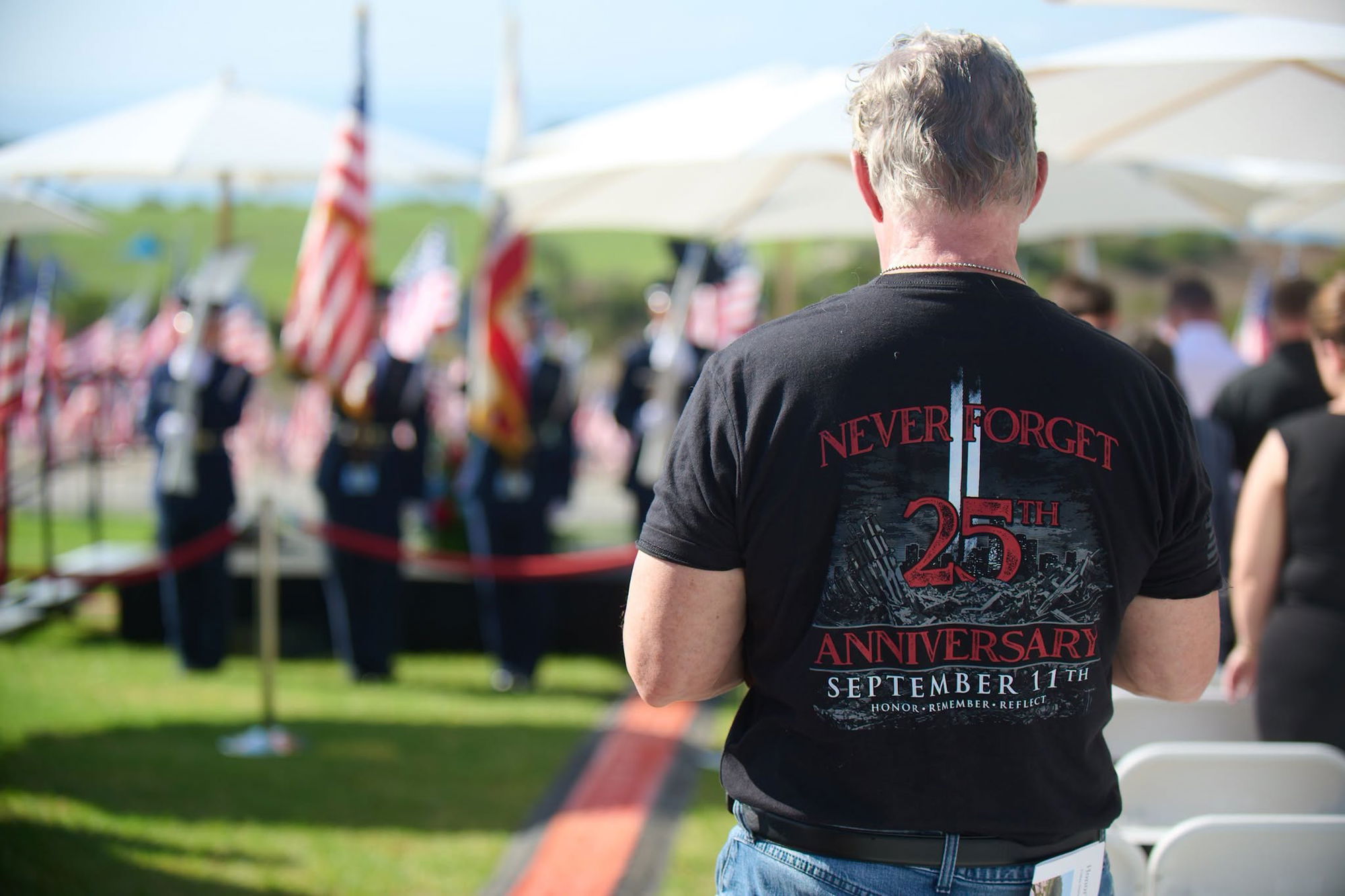
From Pepperdine’s Waves of Flags and Malibu’s Ride to the Flags to ceremonies in Los Angeles and the reading of the names at Ground Zero, a nation pauses to honor 2,977 lives and a legacy of courage, sacrifice, and service
Twenty-five years have passed, but across America on Sept. 11, the names were spoken again. In New York City, family members stood at the National September 11 Memorial and read aloud the names of the men, women and children killed in the terrorist attacks of Sept. 11, 2001, and the 1993 World Trade Center bombing. In Los Angeles, firefighters, law enforcement officers, and public officials gathered in solemn remembrance. In Pennsylvania and at the Pentagon, families, and communities returned to the places forever marked by that morning. And in Malibu, nearly 3,000 flags moved in the ocean breeze across Pepperdine University's Alumni Park, transforming a familiar hillside above Pacific Coast Highway into a living memorial.
A quarter-century after the deadliest terrorist attack on American soil, the observances carried an added significance: remembering not only what happened on Sept. 11, 2001, but considering how the nation carries that history forward when an increasing number of Americans were either children that day or had not yet been born.
The attacks killed 2,977 people after 19 terrorists hijacked four commercial airliners. Two planes struck the World Trade Center towers in New York City. American Airlines Flight 77 struck the Pentagon. United Airlines Flight 93 crashed near Shanksville, Pennsylvania, after passengers and crew fought back against the hijackers. Among those killed were 343 New York City firefighters, 23 New York City police officers, and 37 Port Authority police officers.
But behind that number were 2,977 individual lives — parents, children, husbands, wives, brothers, sisters, friends, and co-workers who never came home.
A hillside of names and lives in Malibu
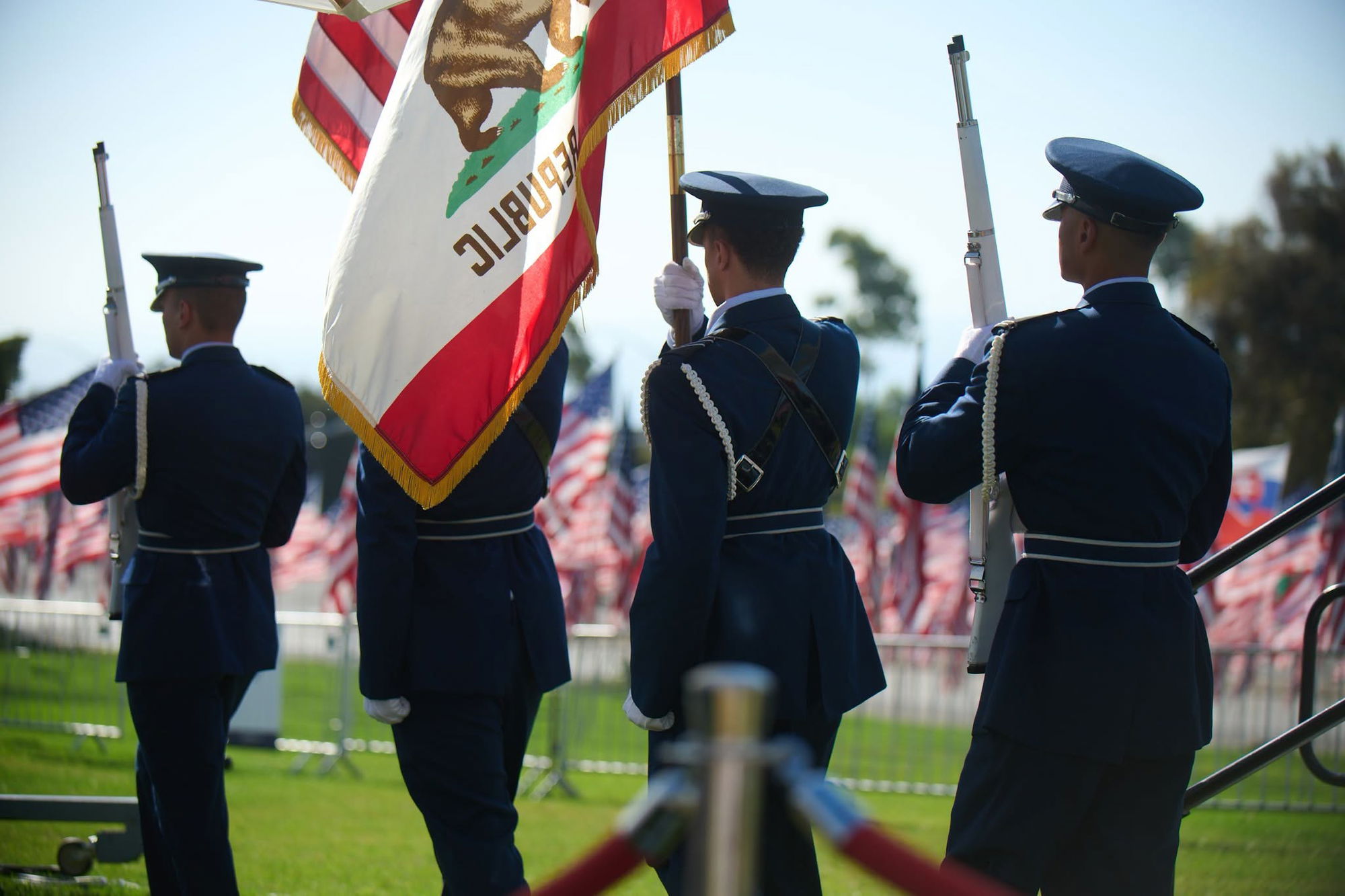
At Pepperdine, that individuality is at the heart of the University's Waves of Flags.
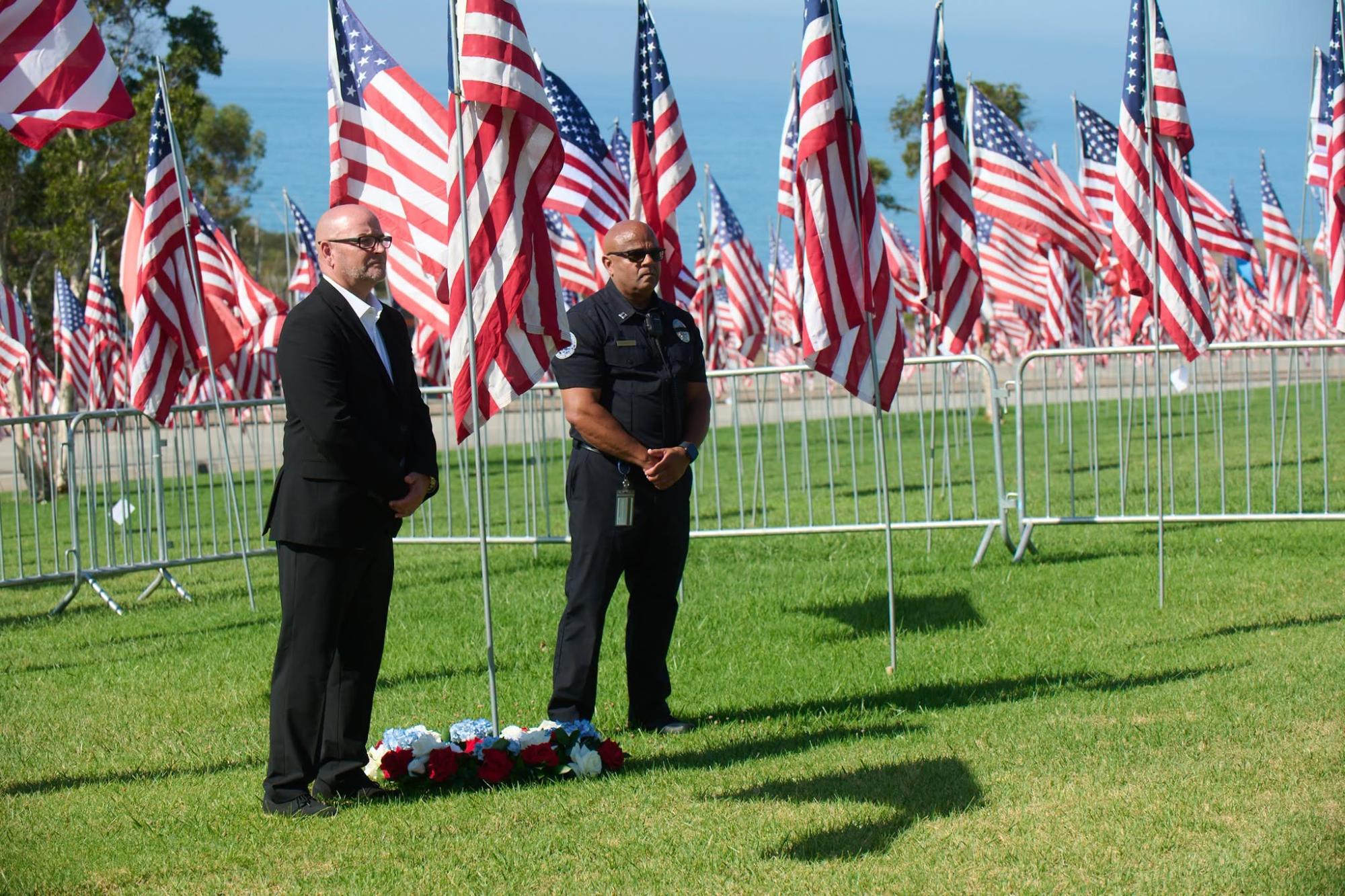
Volunteers placed 2,977 flags across Alumni Park on Sept. 5, with American flags representing American victims and national flags honoring victims from other countries. Visible from PCH and Malibu Canyon Road, the memorial has become one of Malibu's most recognizable September traditions.
Pepperdine held its 19th annual 9/11 remembrance ceremony on Sept. 11 against that backdrop.
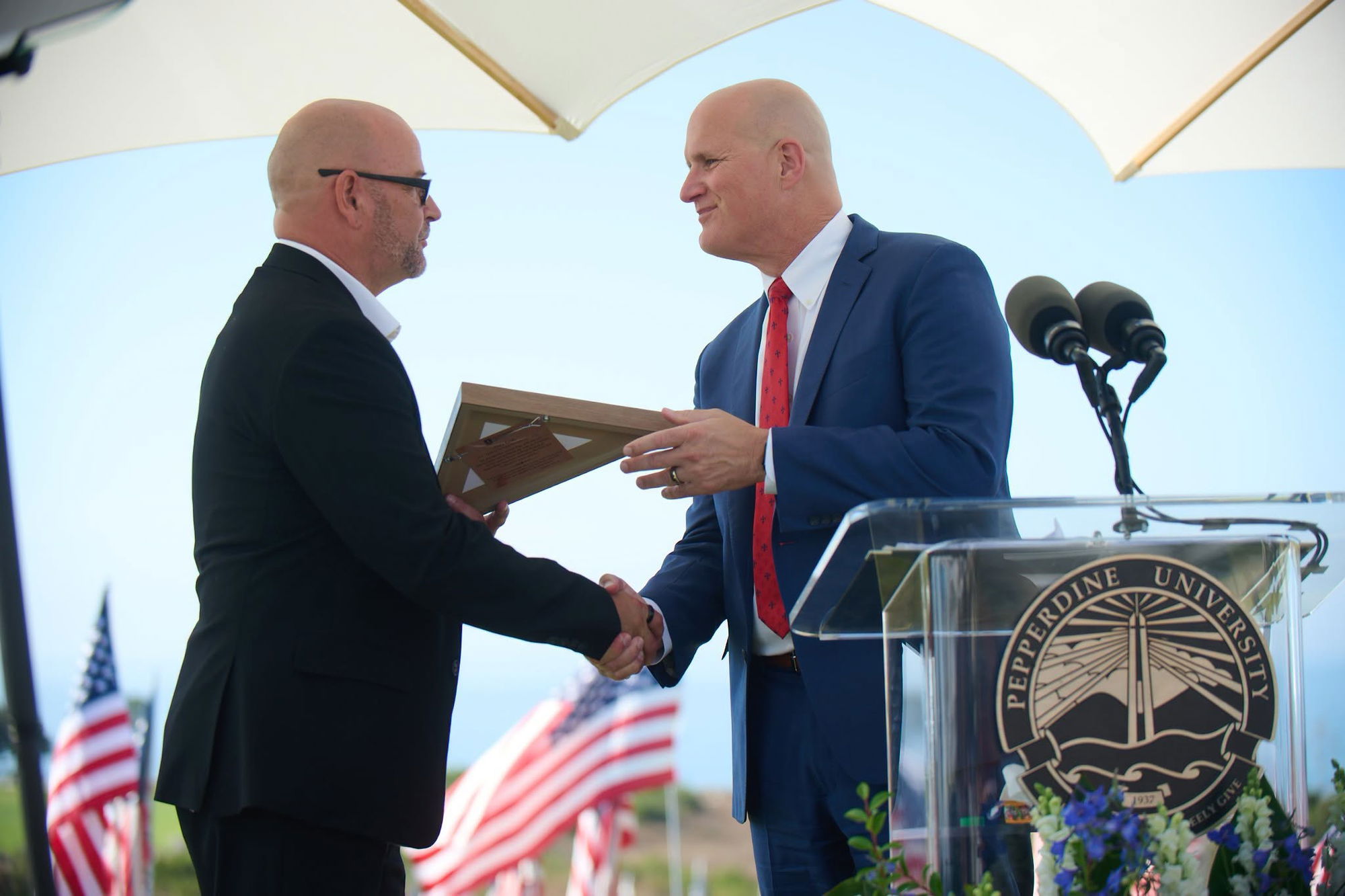
Retired Oklahoma City Fire Department Maj. Chris Fields delivered the keynote address, bringing with him an understanding of tragedy that began years before 9/11.
Fields was among the first responders to the 1995 bombing of the Alfred P. Murrah Federal Building in Oklahoma City. He became known around the country through an unforgettable photograph showing him carrying 1-year-old Baylee Almon from the rubble.
But Fields told those gathered at Pepperdine that a photograph captured only one moment. The trauma continued long after the cameras were gone.
“For most of my life people have seen only that one moment, but I lived everything that came after,” Fields said.
It was a message particularly resonant on an anniversary increasingly defined by the question of how to pass the memory of Sept. 11 to generations without memories of their own.
“Twenty-five years have passed since Sept. 11, 2001; those of us who do remember have a responsibility to those who do not,” Fields said. “We have to tell them, not so they inherit the fear, not so they inherit the anger, but so that they inherit our understanding of what courage, sacrifice, faith, and service look like.”
Fields asked those gathered not to remember only Sept. 11, but Sept. 12 — the days when Americans lined up to donate blood, carried food to police and fire stations, opened churches, displayed flags, embraced strangers, and searched for ways to help.
“We shouldn’t need another Sept. 11 to become Sept. 12 people,” Fields said. “We shouldn't need another national emergency before we remember that we need each other. Service does not require a uniform.”
Today, Fields works to help first responders address the psychological trauma that can accompany careers spent responding to other people's worst moments.
Pepperdine President and CEO Jim Gash also focused on courage and sacrifice, reflecting on the firefighters, police officers, other first responders, and civilians who moved toward danger as thousands fled the World Trade Center.
“Today we mourn, we celebrate, we honor the lives of the noble heroes who answered the call to duty, who some 25 years ago followed that call all the way to the end,” Gash said.
Gash presented Fields with a retired Waves of Flags flag in recognition of his service.
The ceremony also honored Pepperdine alumnus Thomas E. Burnett Jr., MBA '95, who was aboard United Airlines Flight 93. Burnett was among the passengers who fought the hijackers before the plane crashed in a field near Shanksville, Pennsylvania. Pepperdine's Heroes Garden bears his name.
Also recognized was Sid Fernandez, captain of patrol operations for Pepperdine's Department of Public Safety and a 25-year veteran of the New York City Police Department. Fernandez responded on Sept. 11 and helped secure the perimeter outside Ground Zero.
The ceremony ended to the sound of Nicholson Pipes & Drums performing “Amazing Grace.” Throughout the remainder of the day, an LED screen displayed the names of those killed in the attacks.
Pepperdine's Waves of Flags will remain in Alumni Park through Sept. 18, and visitors can leave written messages of remembrance at a Reflection Station among the flags.
Malibu City Councilmember Doug Stewart, who attended the remembrance, connected the sacrifice of Sept. 11's first responders with a kind of courage Malibu residents have witnessed closer to home.
“Twenty-five years ago today, 2,977 people were taken from us,” Stewart said. “Firefighters and police officers climbed toward danger while everyone else ran from it. Malibu knows something about what that courage looks like — we've watched it on our own hillsides. Today we remember the fallen, and we thank the men and women who still answer the call.”
Riding so others remember
The remembrance continued Sunday, Sept. 13, when motorcycles once again traveled down PCH for Ride to the Flags, the annual 9/11 memorial ride closely connected to the creation of Pepperdine's Waves of Flags.
Pepperdine alumnus Ryan Sawtelle helped launch Waves of Flags while he was a student and subsequently created Ride to the Flags as another way to remember those killed while raising money to support wounded veterans. The first ride in 2008 drew about 250 motorcyclists. Over the years, participation has grown to hundreds of riders.
This year's event began at Naval Base Ventura County, with the escorted procession traveling along PCH before arriving at Malibu Bluffs Park across from Pepperdine and its hillside of flags. The 2026 ride returned after the 2025 event was canceled following the Malibu wildfires. Funds from the event support veteran and first-responder mental health through the White Heart Foundation's Guardian Project.
Organizers described the 2026 event as the final escorted memorial ride in its current format, with plans for the event to change beginning in 2027.
For Sawtelle, the work that eventually grew into years of veteran advocacy began on Pepperdine's hillside.
“It all started with the flags,” he previously told The Malibu Times.
Los Angeles firefighters remember
About 30 miles away, Los Angeles marked the anniversary with traditions rooted in the fire service.
The Los Angeles Fire Department held its 25th annual 9/11 Remembrance Ceremony at the Frank Hotchkin Memorial Training Center. The observance included the traditional ringing of the 10 Bells, bagpipes, and a helicopter flyover. LAFD Chief Jaime Moore was joined by public safety officials from across the region.
The ceremony also recognized a connection between Los Angeles firefighters and Ground Zero that began immediately after the attacks. Dozens of LAFD members traveled to New York to assist in search-and-rescue operations.
Moore acknowledged that the consequences did not end when those firefighters returned home.
“Your service mattered, and we know it came with a price,” Moore said, noting that some continue to suffer health consequences from their exposure while others carry experiences difficult to put into words.
“We have not forgotten,” Moore said. “Sept. 11 changed the fire service.”
The remembrance was followed by service. More than 1,000 volunteers gathered at the training center to pack more than 400,000 meals for the Los Angeles Regional Food Bank as part of the National Day of Service and Remembrance.
Other ceremonies stretched across Southern California, from fire stations and city halls to schools and memorials, with bells ringing, honor guards presenting colors and communities observing moments of silence.
At Ground Zero, the names are still read
Across the country, perhaps the most personal observance remained the one that has taken place year after year in Lower Manhattan.
Family members gathered at the 9/11 Memorial plaza and read aloud the names of the 2,983 people killed in the Sept. 11 attacks and the six victims of the Feb. 26, 1993, World Trade Center bombing.
They were not simply reading a list.
Relatives paused to speak directly to those they lost, recalling parents and grandparents their children never knew, siblings who remain missed at family gatherings, and lives that have continued to shape families for a quarter-century.
Seven moments of silence punctuated the ceremony, marking when the World Trade Center towers were struck and fell, the attack on the Pentagon, the crash of Flight 93 and, for the first time, those who have died in the years since from 9/11-related illnesses and injuries. That seventh observance will now become a permanent part of the annual commemoration.
Hundreds of thousands of people participated in rescue, recovery and cleanup operations following the attacks. At Ground Zero alone, workers removed nearly 2 million tons of debris while fires continued burning for more than 100 days. Responders, workers and people living and working nearby were exposed to toxic substances that have contributed to chronic diseases and thousands of deaths in the years since.
The addition of those victims to the annual remembrance underscores a difficult reality: the human toll of Sept. 11 did not stop on Sept. 11.
Twenty-five years later
The anniversary was observed at all three sites where Americans died that morning — New York, the Pentagon and Shanksville — and through ceremonies large and small across the country.
But 25 years also marks a transition.
The National September 11 Memorial & Museum estimates that approximately 100 million Americans are now too young to remember Sept. 11 firsthand. For them, the towers falling are history rather than memory.
That reality gives traditions such as reading the names, ringing the bells, riding the motorcycles, and planting 2,977 flags a different responsibility.
They are no longer only acts of remembrance for those who remember.
They are also a way of teaching those who do not.
At Pepperdine, student Jillian George reflected on the meaning of standing among thousands of flags, each representing a person whose absence continues to be felt.
“Every single flag is a life, and it's someone who's missing from the dining room table, from the living room,” George said. “It's sobering, but being able to have a community to grieve with and carry on their legacy is very important to us.”
Twenty-five years after a morning that changed America, perhaps that is why the flags still rise over Malibu, why motorcycles still travel PCH, why firefighters still stand at attention and why families still return to Ground Zero to pronounce every name.
The number is 2,977.
But the story has always been about the individual lives behind it.
And a quarter-century later, remembering them means more than looking back at what America lost on Sept. 11, 2001. It means carrying forward the courage of those who ran toward danger, the compassion of those who helped strangers in the days that followed and the stories of those who never came home.
For those who remember, the responsibility is now to tell those who don't.
And for another generation, the promise remains the same:
Never forget.