Earthquake ready: Malibu’s guide to preparedness
By The Malibu Times · Mon Aug 03 2026
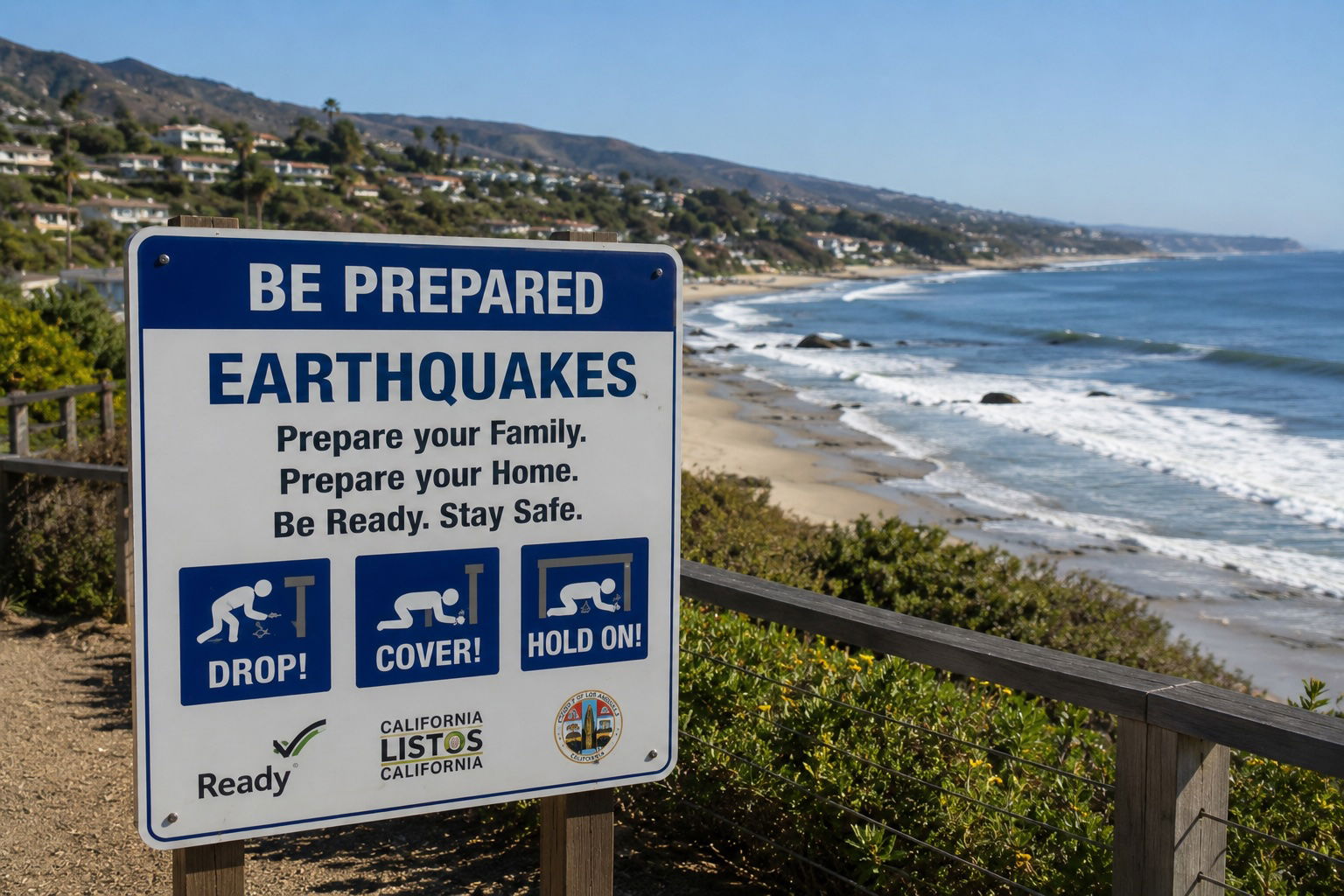
Earthquakes cannot be predicted, but preparation for them can begin long before the ground starts shaking. For Malibu residents, earthquake readiness remains particularly important because of the community’s location in an active seismic region, its steep terrain, limited access routes and proximity to the coastline. City and state emergency officials continue to urge residents to prepare their homes and families for the possibility of a significant earthquake.
The City of Malibu points to an estimated 99.7 percent probability of a magnitude 6.7 or greater earthquake occurring somewhere in California over 30 years, a figure originating from a U.S. Geological Survey earthquake forecast. “The time to prepare is now,” the City states on its earthquake preparedness page.
Malibu's Unique Earthquake Risks
Malibu faces several factors that could complicate the aftermath of a major earthquake. City preparedness materials identify numerous local earthquake faults, steep terrain susceptible to landslides and rockslides, the possibility of roads becoming impassable, and relatively limited local resources during a widespread emergency. The City also identifies the Malibu Coast Fault system as an active system capable of producing a magnitude 6.5 to 7 earthquake.
Those vulnerabilities mean residents should consider not only the shaking itself but what could happen afterward — including damaged roads, utility interruptions, landslides, fires, aftershocks and the possibility that some neighborhoods could temporarily become isolated. For residents along the coast, earthquake preparedness should also include tsunami awareness. Strong or prolonged shaking near the coastline can be a natural warning to move away from the shore and follow official emergency instructions.
Recent earthquakes have provided reminders that Malibu remains seismically active. A series of moderate earthquakes in and around the Malibu area during 2024 and 2025 were widely felt throughout portions of Southern California. While those earthquakes did not result in widespread major damage, smaller earthquakes should not be interpreted as predictors of when or where a larger earthquake will occur. Instead, emergency officials emphasize using them as reminders to remain prepared year-round.
Seconds of Warning Can Matter
California residents have access to one of the nation's most advanced public earthquake early-warning systems. Earthquake Warning California, managed by the California Governor's Office of Emergency Services, uses seismic sensors to detect earthquakes and can provide people with crucial seconds of warning before strong shaking reaches their location. Warnings are available through the free MyShake app, Android Earthquake Alerts, and Wireless Emergency Alerts.
MyShake can issue warnings for qualifying earthquakes of magnitude 4.5 or greater when anticipated shaking reaches established thresholds. Compatible Android devices can receive earthquake alerts automatically, while Wireless Emergency Alerts may also be issued for stronger events. Those few seconds can provide enough time to move away from windows, stop dangerous activity, and take the recommended protective action: Drop, Cover and Hold On.
Know What to Do When Shaking Starts
When an earthquake begins, people should drop to their hands and knees, cover their head and neck and, whenever possible, take shelter beneath a sturdy table or desk. Hold on to the shelter until the shaking stops. People indoors generally should not attempt to run outside while the ground is shaking. Doorways are also not considered safer than other locations in modern buildings.
After the shaking stops, residents should be prepared for aftershocks and carefully check their surroundings for injuries, fires, damaged electrical wiring, broken water lines or possible gas leaks.
In Malibu, residents should also assess whether their location is vulnerable to landslides, falling rocks or tsunami hazards and follow instructions from public safety agencies.
Prepare the Home Before an Earthquake
Some of the most effective earthquake precautions can be completed well before an emergency. Residents can reduce hazards by anchoring tall bookcases and heavy furniture to walls, securing televisions and appliances, properly bracing water heaters, installing cabinet latches and moving heavy or breakable objects from high shelves.
Beds should not be positioned beneath heavy objects that could fall during strong shaking, and keeping sturdy shoes and a flashlight near the bed can help protect against broken glass and debris during a nighttime earthquake. Residents should also consider whether an older home could benefit from a seismic evaluation or retrofit.
Build Supplies for More Than a Day
Every household should maintain emergency supplies that can sustain family members if electricity, water, communications or road access are disrupted. A household earthquake kit should include water, nonperishable food, necessary medications, first-aid supplies, flashlights, batteries, a battery-powered or hand-crank radio, cellphone charging equipment, sanitation supplies, copies of important documents and some cash.
Emergency plans should account for children, older adults, people with disabilities or access and functional needs, and pets.
Families should also establish a communication plan identifying where household members will meet and who they will contact if local cellphone networks become overwhelmed. Residents should periodically inspect emergency kits, replace expired food and medications, and update supplies as household needs change.
Sign Up for Malibu Emergency Notifications
Malibu residents should make sure they can receive local emergency information in addition to statewide earthquake warnings. The City maintains a Disaster Notification System through Everbridge for major emergencies, including earthquakes, wildfires, evacuations and significant road closures. Landline numbers within Malibu are automatically included, while residents and businesses can register additional cellphone numbers, email addresses and other contact information.
The City also provides emergency survival guides, supply lists, family emergency planning materials and information for seniors and pet owners. Malibu's Community Emergency Response Team program provides another opportunity for residents to become better prepared. CERT training helps community members learn disaster preparedness, basic emergency response and skills that may become particularly valuable when professional responders are stretched across a large-scale disaster.
Practice Before It Happens
One of the simplest preparedness measures is also one of the most important: practice. The City of Malibu participates in the annual Great California ShakeOut, when millions of Californians practice Drop, Cover and Hold On. This year's Great California ShakeOut is scheduled for Thursday, Oct. 15, at 10:15 a.m.
Families, schools and businesses do not need to wait until October, however. Practicing earthquake procedures throughout the year can help make the correct response instinctive when seconds matter.
For Malibu, preparedness also means considering what happens after the shaking. A major earthquake could affect Pacific Coast Highway, canyon roads, utilities and communications at the same time. Residents should know multiple evacuation routes when possible, understand the hazards surrounding their homes and be prepared to remain self-sufficient if emergency crews cannot immediately reach every neighborhood.
California's earthquake early-warning technology can provide valuable seconds, but it cannot replace preparation. Cal OES continues to encourage Californians to develop emergency plans, practice Drop, Cover and Hold On and use available warning technology. For Malibu residents, the recent reminders beneath their feet reinforce a simple message: earthquakes may arrive without notice, but preparedness does not have to.
Earthquake Preparedness Resources
Residents can find local earthquake preparedness information, CERT resources and emergency planning materials through the City of Malibu Earthquake Preparedness page. Statewide warning information and details about MyShake are available through Earthquake Warning California, while information about the statewide drill is available through Great California ShakeOut.