The trial I already lived: Watching the Bohm case from the family seat
By Michel Shane · Fri Aug 07 2026
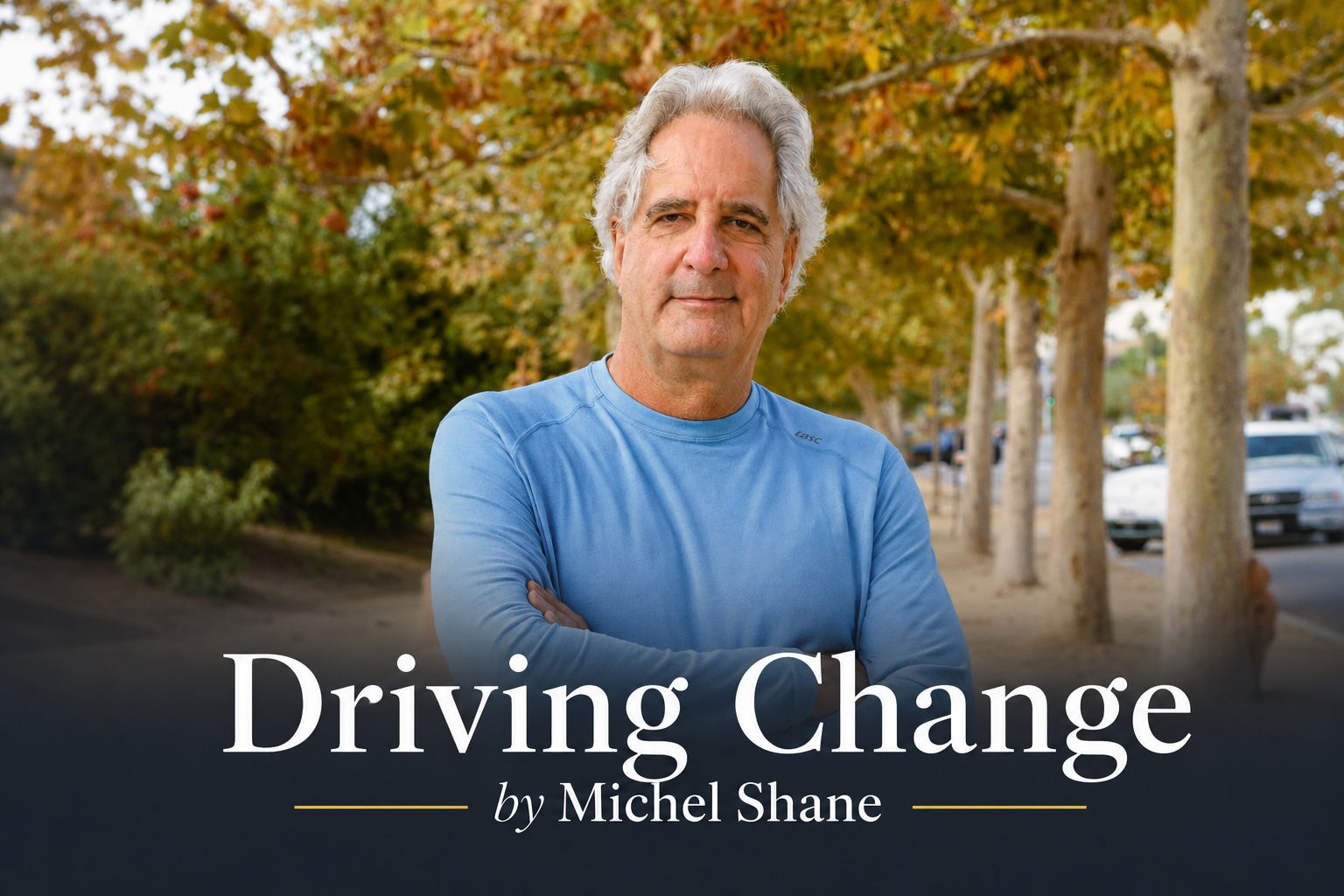
By Michel Shane, Opinion Column
On Sept. 8, in a Van Nuys courtroom, the People of the State of California will finally put Fraser Michael Bohm on trial. Four counts of murder. Four counts of vehicular manslaughter with gross negligence. Four names those charges exist to answer for: Niamh Rolston, Peyton Stewart, Asha Weir, and Deslyn Williams. They were Pepperdine seniors and sorority sisters, standing on the shoulder of Pacific Coast Highway on the night of Oct. 17, 2023, when a BMW left the road and ended their lives. They received their degrees posthumously. By the time a jury is sworn, their families will have waited nearly three years for this day.
I know the seat those families are about to sit in. I sat in it for two years.
In April 2010, the driver who killed my daughter Emily was arrested on this same highway. His first trial began in January 2012. My wife and I drove to the Airport Courthouse every weekday and sat in the gallery while strangers debated what happened to our child. The jury hung, seven for guilt. Mistrial. We started over. A second trial, 13 days, and on May 17, 2012, a verdict: second-degree murder. At sentencing a month later, I stood outside that courthouse and told a reporter we had suffered for two years, living it every single day. I believed no family should ever wait that long for an answer.
I was wrong about what long means.
Do the math with me, because the math is the story. From the day Emily died to the day her killer was sentenced: 26 months. That included a full trial, a hung jury, and a complete second trial. From the night those four young women died to the first day of this trial: nearly 35 months. The Rolston, Stewart, Weir, and Williams families will have waited longer for a trial to begin than my family waited for the entire process to end. And that assumes Sept. 8 holds. I have watched this case for three years. I have watched the motions to dismiss, the disputes over speed data, the claim of a road-rage chase, the new lawyers, the continuances. Every one of those filings is a right the accused is entitled to exercise. Every one of them is also another month four sets of parents spend suspended between grief and resolution. The law counts filings. Families count mornings.
There is one more difference between their wait and mine.
The man who killed Emily was held on $3 million bail. His family could not post it. He sat in a cell from his arrest until his sentencing, 803 days, every one of them later credited against his sentence. When we walked out of court after another brutal day, he went back to jail. The system was slow, but it was not weightless. Custody told us that the state understood what had been taken. I have asked myself many times what those 26 months would have been like if he had been free. If he had walked out of the same courthouse doors we did at the end of each day of testimony and driven home. I do not believe I could have borne it. The Pepperdine families were never given the choice.
Fraser Bohm was charged within days of the crash. Bail was set at $8 million and reduced to $4 million at his arraignment. His family posted it. Ten days after four young women died on that shoulder, he walked out of jail, and he has been free for the entire three years since. All of it is lawful. He is presumed innocent, and bail exists so that presumption means something. But the law never asks the families what those years feel like. Tracy Rolston, whose daughter Niamh died that night, stood outside a bail hearing last fall and said her family was still waiting for some justice to be served. Two years in, still waiting. Now three.
This is not an accusation against a family for using the lawful means available to it. Any family that could post bond would. But it would be dishonest to pretend money played no part in why one man waited at home and another waited in a cell. I am telling you what each outcome does to the people in the gallery, because I have sat in that gallery, and in September I will sit in it again.
At the sentencing of the man who killed Emily, the judge told the courtroom there were two tragedies in it. Her death, and his life spent in prison. I rejected that in 2012 and I reject it today. An appeals court later described a driver who made a deliberate sharp turn toward a child walking on the shoulder. Deliberate. That word ended any talk of two tragedies for our family.
The Bohm courtroom will hold something different, and saying so is the hardest sentence I will write this year. No one claims Fraser Bohm set out to kill anyone. Even the prosecution's theory is about recklessness, not intent. The tests found no alcohol and no drugs in his system. He was 22, one day past his birthday. None of that decides guilt, and no jury will be asked to grade him on a curve. But it changes what waits in that room. Four families buried daughters. A fifth, by its own lawyer's account, sold its home and drained its retirement, and will watch a son judged for the worst night of his life, facing multiple life sentences if convicted. There are no winners waiting in that Van Nuys courtroom. The only question is what the truth is, and whether 12 people can find it.
Some readers will hate that paragraph. I understand. I could not have written it in 2012 either.
The legal question is narrower than the grief. The murder counts rest on a theory called implied malice. The state must prove he did something so dangerous that death was a natural and probable consequence, that he knew the danger, and that he did it anyway. Prosecutors say he was driving at more than 100 mph on a stretch posted at 45. The defense says the number is wrong and that he was being chased. Everything I have just described was argued in open court; I am telling you nothing the lawyers have not said in public. Twelve jurors will sort that out, and I will not pretend to know their answer before they do.
But I know what this trial will not decide. It will render no verdict on the road. Pacific Coast Highway will not be on trial in September. Its failures deserve a reckoning of their own. The stretch where those four women died was killing people decades before Fraser Bohm was born. Research compiled by the Dolphin Run Committee now counts 207 deaths on this corridor since 1975. Be careful here, because both sides will reach for the road when it suits them. A deadly road does not absolve a driver. A driver's conviction does not acquit the road. Both demand accountability, and only one of them gets a verdict in September.
There is one more thing I need to say about those four young women. They were not driving. They were not crossing. They were standing beside the road, bystanders, exactly as Emily was when she was killed. And their deaths moved this state in ways that Emily's death, and the dozens that followed hers, never did. The task forces, the speed camera law, the safety money that had been unthinkable for decades: all of it arrived after Oct. 17, 2023. I spent 13 years asking for that attention one empty chair at a time and could not get it. Four chairs emptied in a single night and the state finally looked. I do not have an explanation for that arithmetic. I am grateful the attention came at all, and wrecked by what it cost.
So here is my commitment to this community. I will not promise to sit in that courtroom every day. I will promise something no other writer covering this case can offer: analysis from my seat. Not the lawyers' seat and not the press seat. The family seat. I have lived a mistrial, a retrial, the motions, the waiting, and the verdict, and when this trial begins I will write in these pages what the proceedings mean, not just what was said. Not as a lawyer, because I am not one. Not as a neutral, because no one who has buried a child on that highway gets to be neutral. The families of Niamh, Peyton, Asha, and Deslyn deserve coverage that knows the difference between justice and spectacle.
Here is the first piece of that analysis, before a single juror is called. The families will walk in expecting a jury of their peers. Then they will watch both sides excuse one prospective juror after another, and nobody explains the strikes to the gallery. I sat through that process twice. From my seat, the pattern I thought I saw was that whenever a juror seemed sharp enough to take the evidence apart and build a verdict from it, that juror went home. I could not know the real reason for a single strike. Nobody in the gallery can, and that is the point. You are left to wonder what one side saw that it feared. A jury of your peers turns out to be a jury of the people neither side found a reason to reject. It is legal. It is how the system works. Nobody warns you how it feels to watch.
Fourteen years ago, the state proved what happened to my daughter. In September, it will try to prove what happened to theirs. I owed it to Emily to sit through every day of her trials. I owe these four families something different: to make what happens in that courtroom understandable to the community that grieves with them. The verdict belongs to the jury. The witnessing belongs to all of us.