The EPA and SBA are in town focusing on expediting permitting
By Barbara Burke · Mon Feb 16 2026
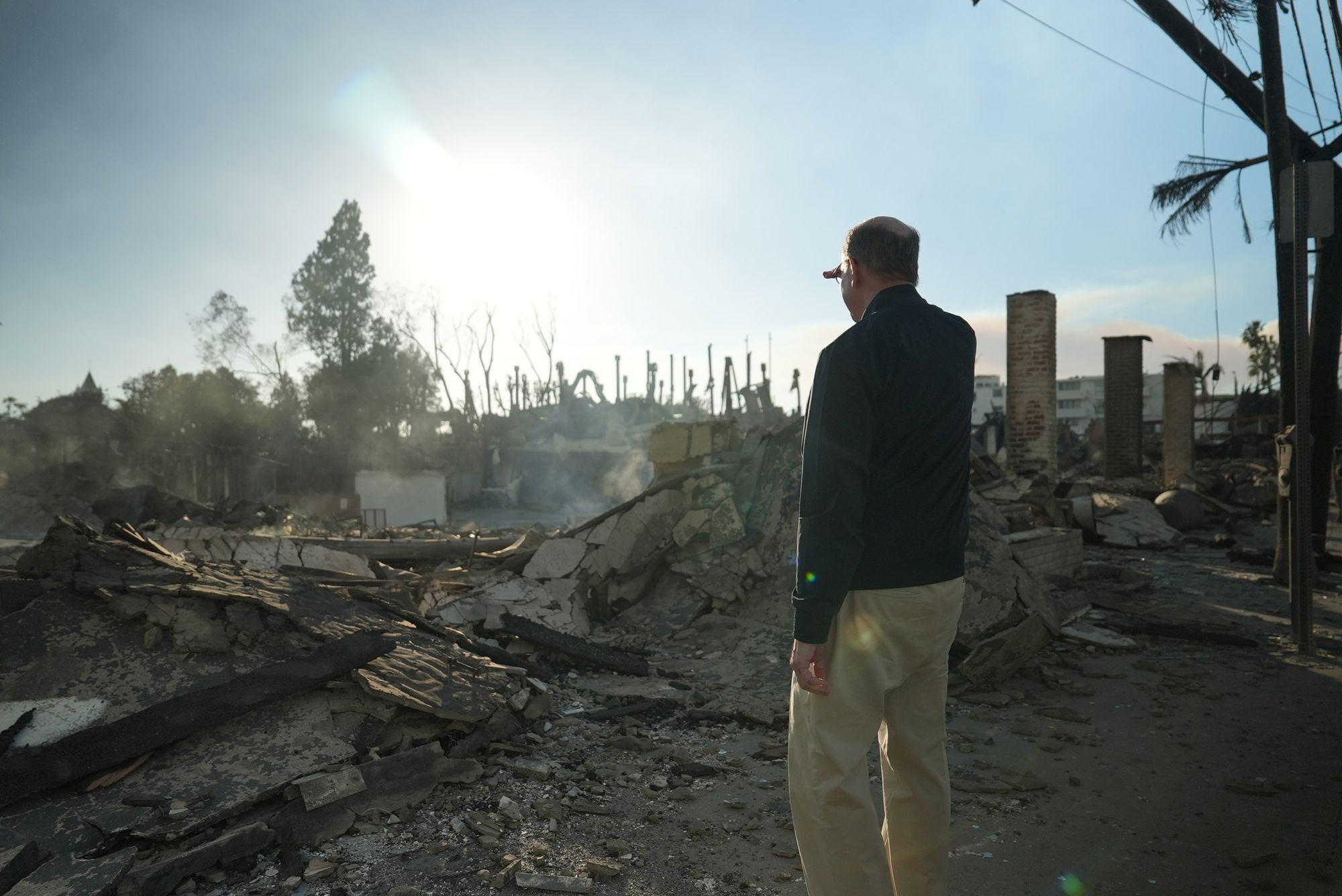
In late January, President Trump signed Executive Order 14277, entitled “Addressing State and Local Failures to Rebuild Los Angeles After Wildfire Disasters,” mandating that the Small Business Association and the Environmental Protection Agency take over permitting authority for Eaton and Palisades fire victims who are rebuilding. The order authorizes the Federal Emergency Management Agency and the SBA Administrator to promulgate regulations allowing builders to self-certify that construction has met “state and local substantive health, safety, and building standards.”
The order strongly criticized Gov. Gavin Newsom’s and Los Angeles Mayor Karen Bass’ pre-fire preparation, wildfire response, and rebuilding procedures. “This marked one of the greatest failures of elected political leadership in American history, from enabling the wildfires to failing to manage, and it continues today with the abject failure to rebuild.”
Several federal, state, county, and local officials voiced strident opposition to the executive order, with the Los Angeles County Board of Supervisors unanimously voting to oppose the federal government usurping jurisdiction over rebuilds and Newsom pointing out that the state, counties and cities are “STILL waiting for the president to grant disaster recovery funding.” Newsom’s response added, “He should keep LA out of his mouth unless he is planning to grant the disaster funding they need.”
Brad Sherman, Malibu’s congressman, discussed relevant principles of federalism and questioned both the constitutionality and feasibility of the federal government assuming control of local permitting. He noted, “The Tenth Amendment reserves to the states functions not expressly given to the federal government and permitting has always been in the purview of local and county governments.”
Sherman’s strong reservations also center on concerns that building along Malibu’s coastline and on the land side, where there are landslide and slope stability concerns involve special considerations and allowing self-certification could literally lead to disasters.
Nevertheless, the SBA issued a new “Regulatory Guidance to cut California’s red tape and expedite the Los Angeles rebuild” on Jan. 29. The guidance allows builders to self-certify compliance with substantive state and local rebuilding requirements for SBA disaster borrowers who have waited 60 or more days for their permits and other rebuilding-related approvals. Accordingly, the new guidance will allow wildfire survivors to bypass permitting delays and to begin rebuilding using the $3.2 billion in SBA disaster relief that has been approved for Eaton and Palisades fire-afflicted communities. According to the SBA, it approved 12,600 disaster loans for Los Angeles totalling $3.2 billion in disaster relief, “representing over half of all disaster aid approved in fiscal year 2025.”
The SBA’s guidance elaborated, stating, “Yet despite this unprecedented federal response, less than 25% has been drawn down by borrowers due to enormous permitting backlogs that prevented survivors and their builders from beginning the rebuilding process.”
Borrowers interested in the self-certification option to “bypass local bureaucracy are required to submit just two documents to the SBA: A disaster loan modification application and a builder’s certification,” according to both the guidance and letters SBA has sent to borrowers. Once those submittals are approved by the SBA, those documents formally amend the borrower’s loan authorization agreement, replacing the language that would otherwise require local permits before rebuilding can begin.
The guidance informs, “While this action immediately addresses permitting delays affecting California wildfire survivors, the same process will apply in the future to any local jurisdiction whose permitting systems prevent survivors of presidentally declared disasters from moving forward with recovery.”
Readers interested in learning more about the bypass option can visit sba.gov/funding-programs/disaster-assistance/options-bypass-permitting delays.