

Malibu, Topanga, and Santa Monica Mountains residents work on developing a game plan before the next fire
As wildfire seasons grow longer and more dangerous across the Santa Monica Mountains, local residents with horses, alpacas, goats, and other large animals are taking evacuation planning into their own hands.
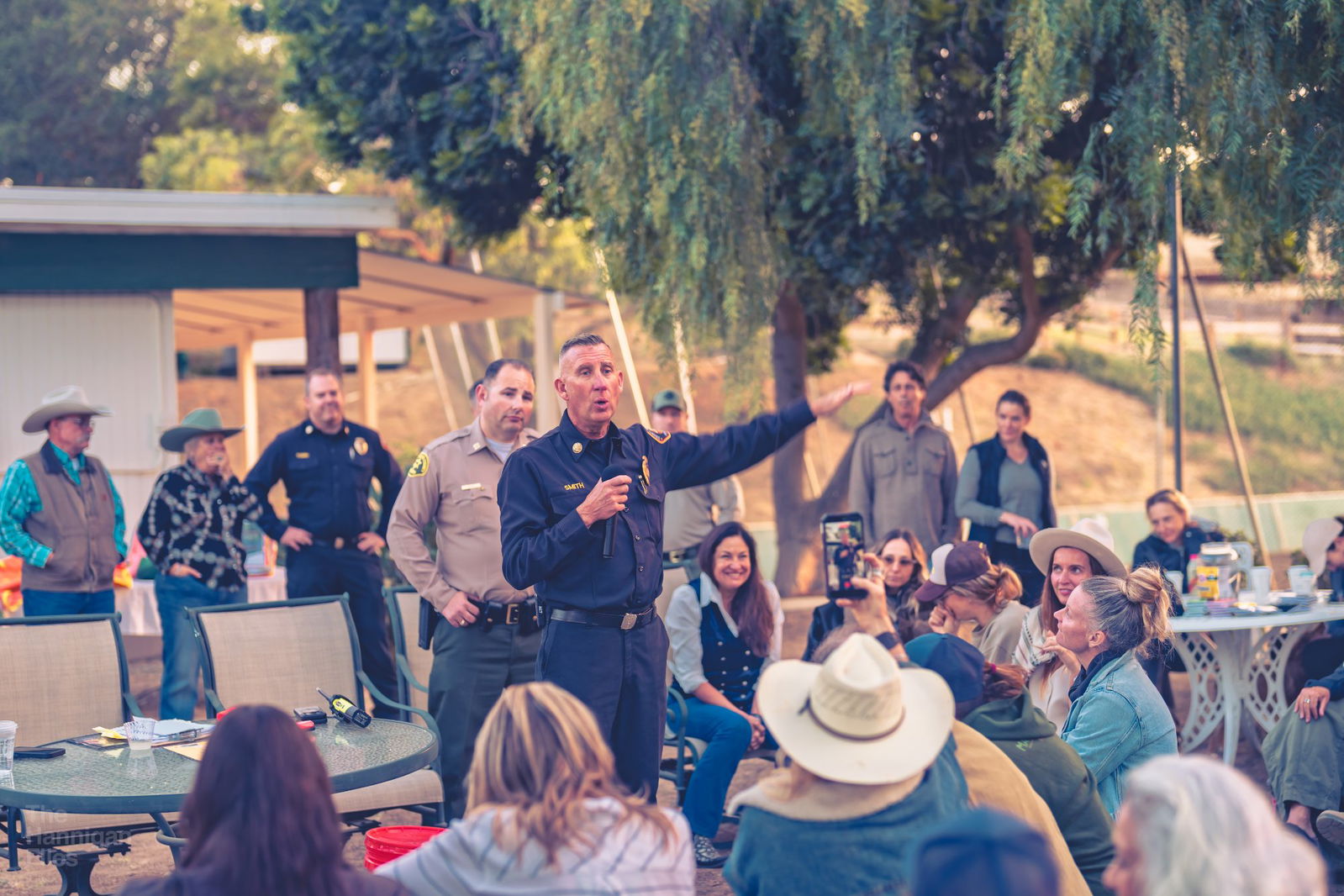
At a recent large-animal evacuation preparedness meeting at Fair Hills Farm in Topanga, more than 60 people gathered alongside firefighters, sheriff’s deputies, county animal control officials, and commercial haulers to discuss one urgent message: Waiting too long during a wildfire can be catastrophic.
“Waiting is a disaster,” said Ali Acker, a longtime Topanga resident, volunteer shelter manager, and Level 3 member of Los Angeles County’s Equine Response Team (ERT). “If you act early and get your horses out at the first puff of smoke, even if it’s a false alarm, that’s far better than risking animals burning because people waited too long.”
The meeting brought together residents from Malibu, Topanga, and surrounding mountain communities still shaken by the Franklin and Palisades fires. Organizers said the event was designed not only to educate residents about evacuation logistics, but also to build stronger neighborhood networks before the next emergency strikes.
Acker, who helped launch the county’s original equine emergency response efforts following the devastating 1993 Old Topanga Fire, said many of the same challenges remain today.
Back then, she recalled, volunteers scrambled to rescue horses while flames moved rapidly through the mountains. “I realized this was crazy,” Acker said. “We needed to be more organized.”
Over the next several years, Acker and other local equestrians worked with Los Angeles County officials to develop the Equine Response Team, including emergency sheltering operations at Pierce College. Today, the county still relies heavily on trained volunteers to help manage those shelters during major incidents.
But Acker said another critical component needs rebuilding: coordinated trailering support to help evacuate animals safely before roads close.
“We have the sheltering,” she said. “What we don’t have — and what we’re talking about bringing back — is the trailering portion.”
The meeting focused heavily on preparedness. Organizers urged animal owners to create detailed evacuation plans well before fire season intensifies.
Every barn, Acker said, should have primary, secondary, and tertiary evacuation plans. Owners should identify who can move animals if they are not home, where animals will go, and how food, medications, and veterinary information will travel with them.
“Have a plan. Practice the plan,” she said. “People need to know: Can you get your horses out when it’s pitch black and day turns into night from smoke?”
One of the most important lessons, she added, is ensuring animals are trained to load into trailers under stressful conditions.
“If your animal doesn’t trailer, it’s going to be left behind,” Acker warned.
Horses may react differently to various trailer styles, including step-up trailers, ramp trailers, or open stock trailers. Some animals refuse to separate from bonded companions and may only travel if another horse — or even a goat — accompanies them.
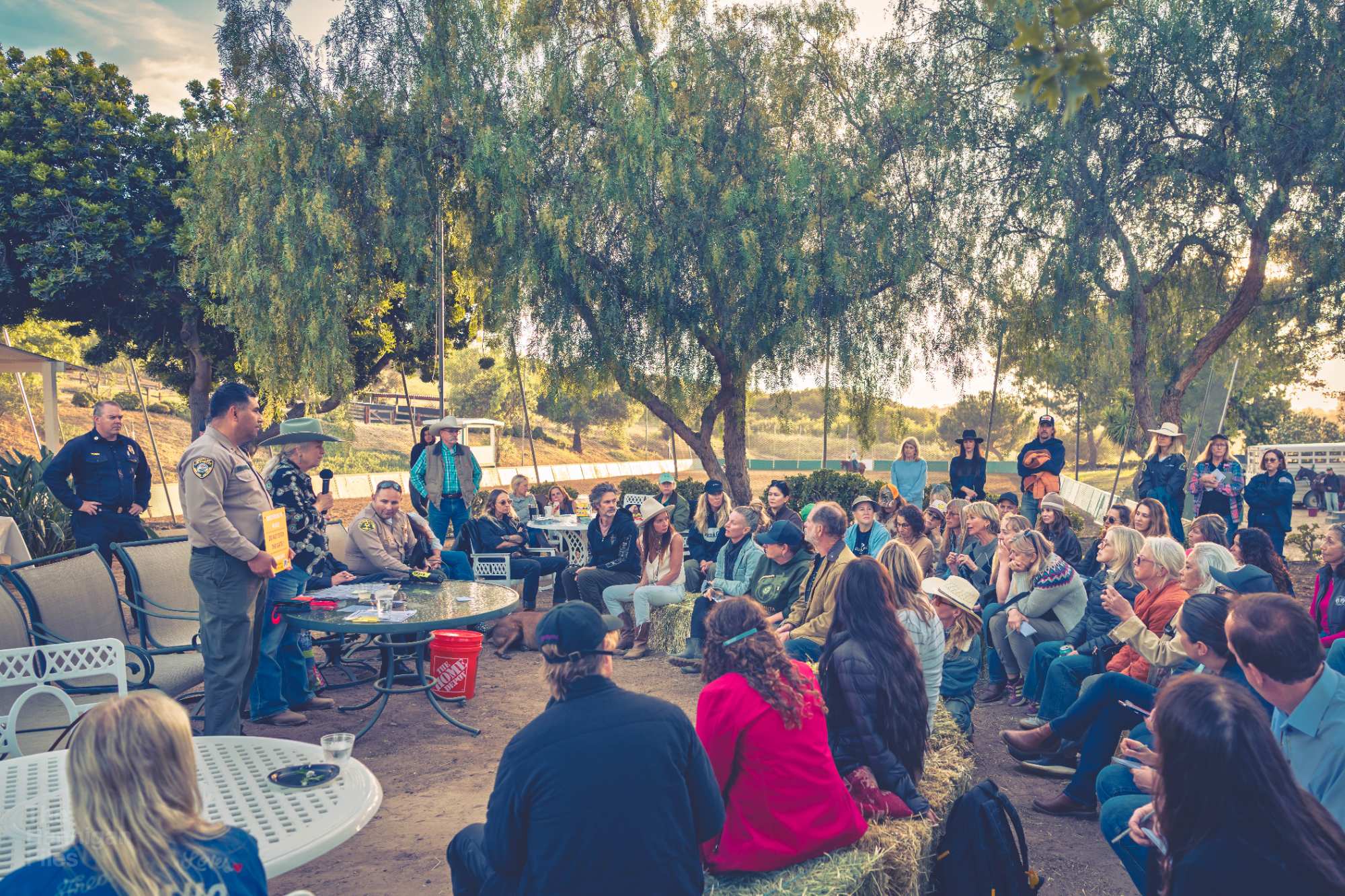
Malibu City Councilmember Haylynn Conrad, who helped organize the meeting, has personally evacuated animals during multiple fires, including the Woolsey, Franklin and Palisades blazes.
During the Franklin Fire, Conrad evacuated five horses, three miniature horses, chickens, dogs, and, of course, her children.
“For me, it’s like putting on your oxygen mask first,” she said. “These animals don’t have a voice. They can’t evacuate on their own.”
Conrad said the recent fires exposed major gaps in preparedness, even among experienced residents.
“There were people without gas in their trailers,” she noted. “Someone’s battery was dead because they forgot to start their truck. Someone else didn’t have the right hitch pin.”
The event encouraged residents to inspect trailers regularly, maintain emergency supplies, and prepare “go bags” for both people and animals long before evacuation orders arrive.
“When the fire is happening, it’s too late,” Conrad said. “We need to be more proactive.”
Another major point emphasized during the meeting was that simply releasing animals into open areas is not a safe evacuation strategy.
“We don’t want people letting livestock go,” Acker said. “They need a plan.”
She recalled that during the 1993 fire, one of Topanga’s horse fatalities occurred after a horse was released and later struck by a vehicle in heavy smoke conditions.
Organizers also stressed that wildfire preparedness is becoming increasingly community-based. Residents were encouraged to coordinate with neighbors, exchange contact information and develop localized support systems for animal evacuations.
Conrad said she hopes to continue organizing similar preparedness symposiums in Malibu and eventually develop a Community Animal Response Team, or CART, modeled after neighborhood emergency groups like CERT.
“We all share the Santa Monica Mountains,” said Conrad. “If they burn, we burn. If we burn, they burn. We’re all in this together.”