Post-fire toxicity test results announced by local scientists
By Judy Abel · Sat Feb 14 2026
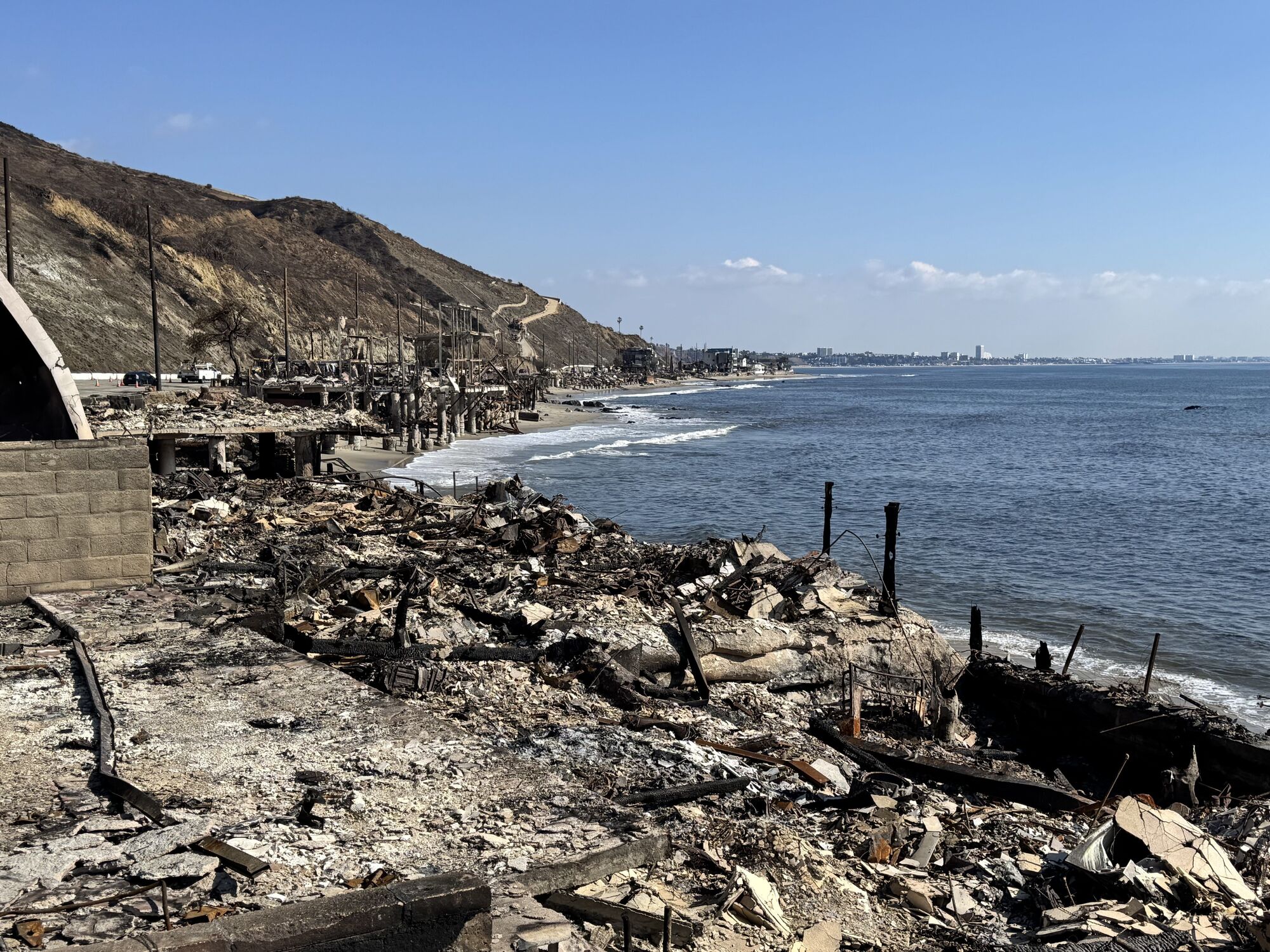
Professors from USC, UCLA, and other nonprofit scientists collaborate in absence of government testing
A group of scientists from area universities, calling themselves CONSORTIUM (Community-Oriented Network for Scientific Observation, Recovery, and Tracking of Impacts from Urban Megafires) has just released initial findings after a year of testing for toxins from the Eaton and Palisades burn scar areas.
Because government agencies decided to end soil testing after the January 2025 dual conflagrations, fire recovery nonprofits reported that fire-ravaged communities were left with confusion and fear over the safety of returning home. Using funds from FireAid and other philanthropies, a consortium of university researchers was able to collaborate on the largest soil testing project ever performed in Southern California.
With soil samples collected from 6,400 lots in both burn scars and including at some with standing homes, the groups from CAP.LA (Community Action Project — Los Angeles) and USC’s CLEAN (Contaminant Level Evaluation & Analysis for Neighborhoods) soil testing program found a significantly higher level of lead in Altadena than found in samples from the Palisades Fire areas. This is attributable to the higher concentration of older homes in Altadena that likely used lead paint. Screening for lead was particularly important due to its health risks.
According to iO Wright, of the nonprofit PostFire.org that presented the findings this week, “In the state of California, the Environmental Protection Agency has said that 80 PPMs, parts per million, is the residential screening level for lead. That is the threshold. So, if you have over 80 PPMs of lead that is technically higher than the state of California says is safe for human and animal exposure. This has been confusing. There are different EPAs.”
Wright explained there is the state CalEPA, which says that 80 PPMs of lead is safe, and the more lenient federal EPA, which says that 200 PMs of lead is safe.
“They're screening thresholds. I wouldn't describe them as safety thresholds and the reason why is there's no safe level of lead for exposure," he said. "I would encourage everyone to take advantage of some of these soil testing programs that are free and that are available to you because it gives you the information you need to figure out what the right next step is.”
On a positive note, very few properties were found to have extraordinarily high levels of lead contamination.
“In the state of California and EPA, they generally consider lead contamination levels of 1,000 PPM or higher to be considered hazardous waste. There have only been a couple dozen samples tested at that level," Wright said. "It reassures us that there's not a ton of places out there that have truly, truly hazardous levels of lead that need to be avoided at all costs. What we have found though is that about 42% of the samples that we have tested have shown lead levels above the state screening threshold.”
Wright elaborated, “Lead is a neurotoxin, and the health risks it poses to humans present over time. Those health risks are particularly acute for young children whose brains are still developing. You want to make sure you are limiting young children's exposure to places that you know to be contaminated with lead and limiting that exposure could be in the form of literally just avoiding interaction with that area. It can be making sure that they're not ingesting the soil because the primary way that lead is absorbed by your body is by ingesting it. Again, the health risks that are associated with lead are exposure over time.”
But the researchers tested for 18 toxins altogether and found another problem is arsenic. The proportion so far of tested homes with scraped soil within the Eaton burn zone above a 12 ppm arsenic background is four-percent, but higher in the Palisades zone at 17%. Non-scraped lots in Eaton were 5% and higher again in the Palisades zone at 20%. And again, the Palisades zone fared worse for arsenic levels when tested at lots with standing homes with non-scraped soil with 8% above a 12 ppm background for Eaton properties and 10% in the Palisades. These are initial findings as research continues.
The scientists on a Feb. 1 webinar that announced the testing results all agreed that fire-affected homeowners have their lots tested.
Free soil testing is still available through the USC CLEAN program. The Los Angeles County Department of Public Health is also running a soil sample testing program. “It is very aligned with the work that our team and the CAP.LA team is doing and we've all been collaborating,” said Sujeet Rao, USC CLEAN director.
Unfortunately, applications for soils testing is currently on pause through CAP.LA because its funding has been exhausted.
More information is available at PostFire.org.