Perspective: A year without a home; How it’s been going
By Judy Abel · Sun Feb 15 2026
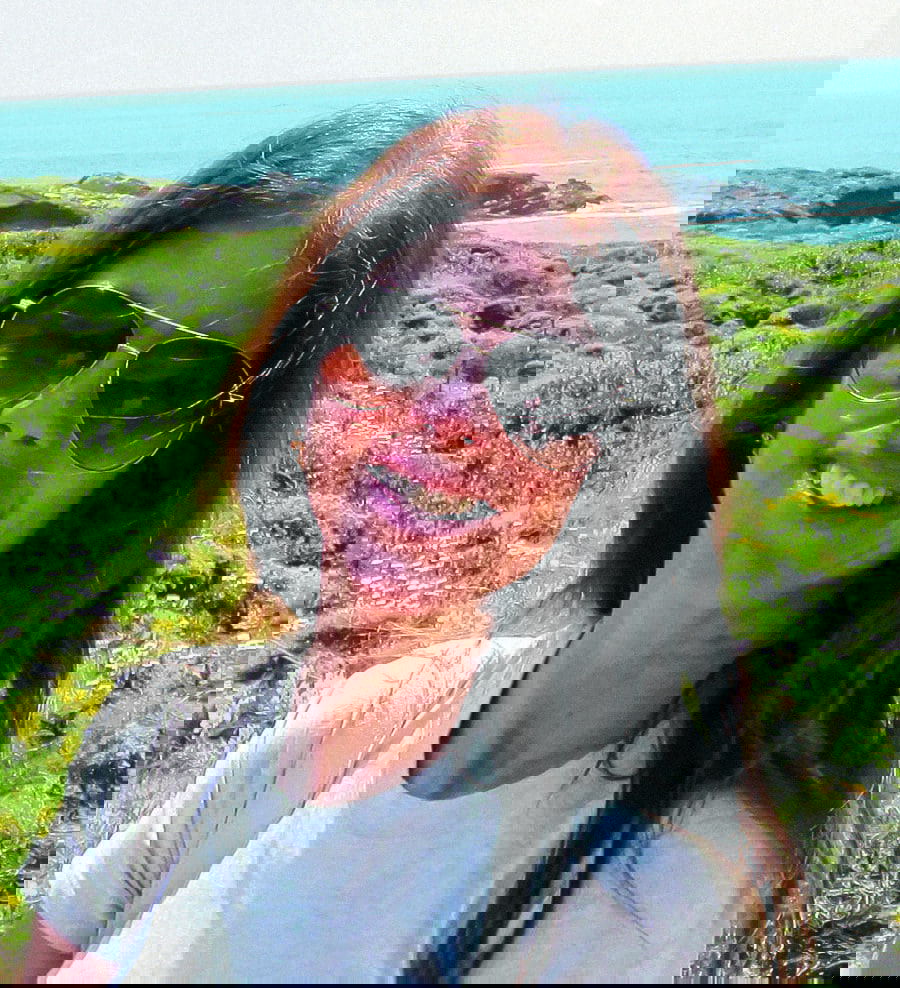
A year after losing my home in the Palisades Fire, people ask, “So … how’s it going?”
I usually pause before answering. Not because I don’t know what to say, but because the truth doesn’t fit neatly into a sound bite.
It’s complicated. As you might imagine.
I was lucky. I had insurance. Real insurance. Maybe not enough insurance, but close enough. Before the fire, my insurance company — now under investigation for misconduct — had sent us a letter of cancellation, effective a few months in the future. The joke was on them. Our house burned to the ground before the cancellation date. But soon enough, the joke was on us.
Despite being meticulously organized and submitting every receipt, inventory list, and form with military precision, it took 11 months to be just about paid out on our policy. Let this be a public service announcement: just because your policy is written for a certain amount does not mean an insurance company writes you a check for that amount. We had to fight for every line item. It became a full-time job that required technical fluency in policy language, legal stamina, and more patience than I knew I possessed. A full-time job where on your first day you’re scrambling to find a place to live.
The fire didn’t just take our home. It erased our mailing address, our routine, our sense of place and our community. And Malibu, already one of the tightest rental markets in the country, suddenly became a humanitarian crisis with killer ocean views.
I started by asking everyone I knew if they knew of a rental. A friendly City Councilmember referred me to a real estate agent who promised she could “hook me up.”
She could — for $60,000 a month.
Not in my budget. Not in my insurer’s budget either. Probably in the budget of the CEO of my insurance company. In 2022, the CEO made $24.4 million.
Just getting into town to see rentals was an ordeal. PCH was closed through eastern Malibu, so my husband and I left at 6 a.m. to take the long way around.
The first rental was right on the beach. Beautiful. Serene. Sun-drenched. Then I asked where the bedroom was.
“Upstairs,” the agent said casually.
Up a tortuous and torturous firepole-wide staircase. Just think about that for a second. I don’t know about you, but I go into my bedroom at least 20 times a day. I could already picture myself clinging to that narrow wooden corkscrew, hauling laundry, shoes, and coats up and down like an Olympic sport.
“And the bed?” I asked.
“No problem,” the agent said. “You just bring in a crane from the beach, open the window, and swing the furniture straight in.”
Of course! Silly me.
Later that day, we found a lovely unit. Not as lovely as the home I had completed remodeling on Monday, Jan. 6, 2025 — one day before the fire — but lovely enough. Our agent urged us to take it immediately. Rentals after the fire were as hard to come by as Labubus.
We shook hands with the listing agent. He told us he was heading straight to his office to draft the lease.
Three hours into our drive back to Los Angeles — where we were temporarily evacuated — we got the call.
The offer was withdrawn. The unit had been rented to someone else. For 10 percent over asking. And only for six months.
Price gouging? Depends on your definition. Legal? Most assuredly.
Days later, another unit opened in the same complex. To get it, we were advised to take it sight unseen and pay all 12 months upfront in cash, plus a security deposit.
We did.
Same price as the bigger unit we lost. No garage. No dishwasher. For what we paid out of pocket, we could have bought a house in another state.
Oh, one little thing that hadn’t been disclosed: The adjacent unit, with which it shared a wall, was in the middle of a to-the-studs remodel. Well, technically not the middle, as the rate of progress suggested another 18 months of wall-rattling and nerve-jangling construction.
One year later, we’re in a different place, but like the first, a place that is not home. Parking without a garage. Scrambling to charge my car. (My husband’s car we don’t need to worry about as it burned in the fire). Reaching for an item that I momentarily forget is lost.
People say, “At least you’re safe.” And they’re right. We are.
But safety is not the same as stability. And survival is not the same as living.
A fire doesn’t just burn down a house. It dismantles a life. It upends routines. It dissolves certainty. It turns homeowners into nomads and scatters neighbors to the wind.
And yet, somehow, we go on. We adapt. We laugh at the absurdity. We haul laundry up imaginary fire poles and fill out rental applications. We become experts in insurance law and disaster resilience.
We carry our home now in memory — in the scent of a fruit tree, in the echo of ocean waves, in the floor plans we still remember by heart.
And we wait.
For the rebuild.
For the return.
For the day we finally unlock a front door that is ours again.
More adventures in my first year without a home — still to come.