One year after the Palisades Fire, rebuilding hangs in the balance
By Barbara Burke · Wed Jan 07 2026
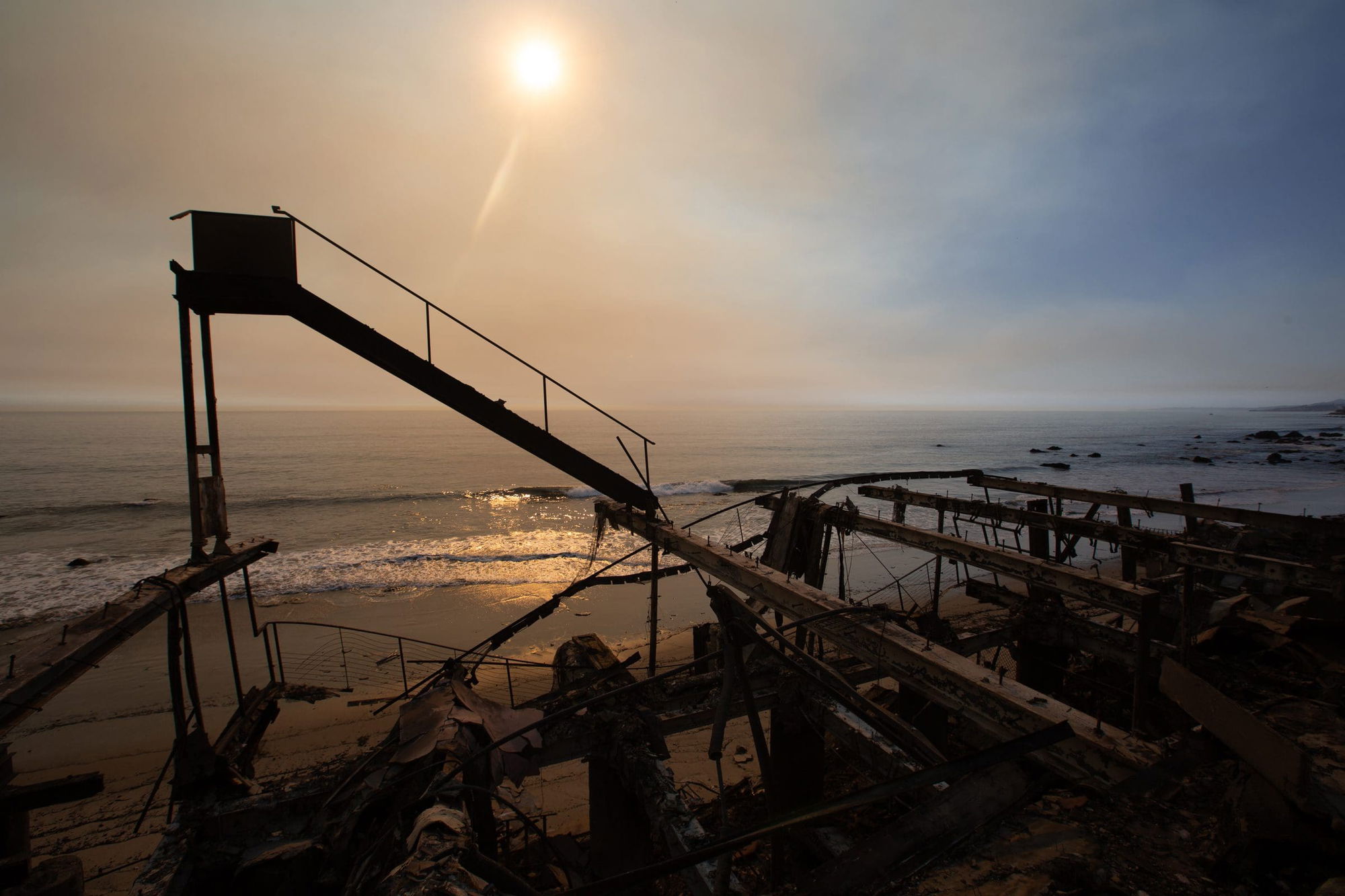
While fire victims weigh whether to rebuild or sell, local policymakers and Chamber reps look for ways to help
As the one-year anniversary of the Palisades Fire is upon us, those who need to rebuild their homes face daunting decisions regarding how to make the math in order to do so. For many, insurance covering loss of the use of their homes, which has been funding their temporary housing for the last year, is rapidly dwindling, if it hasn’t already been exhausted. For many, their lawsuits against Southern California Edison or the Los Angeles Department of Water and Power (LADWP) or insurers are glacially proceeding through the discovery and litigation processes with no end in sight, uncertainty as to their success and concerns regarding how much such efforts will render and when.
Should I stay or should I go?
For many, their fears continue to escalate due to the escalating costs of building materials amidst ever-changing tariff rates and the increasing price of soft costs such as design, permits, and professional services add to their increasingly confusing calculus as they weigh their options and wonder whether to stay or go.
Indeed, according to an article that dropped today in Westside Today, entitled "Investors Snap Up Nearly Half of Vacant Lots in Fire-Damaged Palisades and Malibu," 19 of 43 lots sold in the 90265 ZIP code in the third quarter of last year were purchased by investors. At first blush, many may wonder what is wrong with investors purchasing lots. After all, it’s a free country. However, such statistics engender profound sadness for those who continue to hope that destroyed neighborhoods will one day be re-inhabited by long-established locals rebuilding their homes because those are who make Malibu special. Many locals worry that investor-purchased properties will not be occupied by families, but instead by a combination of addiction rehabilitation facilities and short-term rentals, neither of which fill Malibu’s schools and makefor a neighborhood in the traditional sense.
Amidst such consternation, The Malibu Pacific Palisades Chamber of Commerce hosted a brainstorming session on Dec. 17 featuring panelists California State Sen. Ben Allen, Malibu Mayor Marianne Riggins, the new Chamber CEO Maryam Zar, who founded the Palisades Recovery Coalition and is Chair Emeritus of the Pacific Palisades Community Council, as well as representatives from the offices of Congressman Brad Sherman, LA County Supervisor Lindsey P. Horvath and various Los Angeles County and City of Los Angeles agencies. Several things were discussed and explored that merit further consideration by elected officials and civic leaders.
Things that could happen to help rebuild efficiently and effectively
Economies of scale can be applied to communal wildfire procurement, thereby saving costs of rebuilding and of the costs of procuring wildfire disaster supplies and mitigation resources. Commonly known as bulk purchasing, the concept is quite simple although implementation for rebuilding homeowners might be a bit tricky. The concept is simple: If those rebuilding pool resources to purchase supplies, they can purchase more and save some costs, as in, “To build in Malibu, we all need to utilize fire-resistant materials, windows, doors and exteriors, so why don’t we all buy those materials in bulk together?” This also could apply to coordinating construction services, as in “why don’t we all share the costs of the crane we all need to install caissons on a coastal lot?”
Similarly, communities and local governments can pool resources to buy equipment such as personal protective equipment, hoses etc. as well as to procure services and technology in bulk, thereby freeing up funds to assist those rebuilding.
Simply stated, rather than being boxed in by the overwhelming process of rebuilding hundreds of homes, why don’t we all think outside the box collectively?
FEMA reimbursements
In September, city staff provided the City Council a breakdown of the fire-related costs submitted to FEMA for reimbursement. Those include $1.86 million for debris removal for the city clearing burned material from roads, parks and its properties. Another $5.16 million was expended for the emergency operations center, City Hall smoke cleanup, sandbags, guardrail protection, septic tank abatement and emergency security. Yet another $1 million was spent on fire-related roadway and bridge repairs. Repairing storm drains and deep-water systems, especially in Big Rock, cost $3.16 million. Repairs at Las Flores Creek Park and other recreation centers amounted to $2.1 million.
FEMA covers 100% of emergency work for the first 180 days. After that, 75% of any expenses are reimbursed by FEMA, while the State of California covers $18.75% and the city remains responsible for 6.25% of the costs.
“Tens of billions of dollars in FEMA claims that would have been paid out to other states remain unreimbursed,” a frustrated Allen shared. If the reimbursements were forthcoming, then municipalities such as the City of Malibu and the City of LA, as well as Los Angeles County and the state might be more amenable to proposals such as that proffered by Jeremy Padawer, a long time Palisades homeowner who lost his home in the fire and who filed a petition on Change.orgfive months ago proposing that there be no state or local sales taxes imposed on building materials and supplies for those who are rebuilding.
At first, that idea seems equitable — and, indeed, it certainly would help those rebuilding. However, the proposal no doubt gives policy makers and elected officials great hesitancy because the fire-related expenditures by cities, towns, the county, and the state are astronomical and, especially as they await FEMA reimbursements, those political entities are strapped for funding even as they still have to provide ongoing essential services. This reality was addressed by Malibu City Councilmember Doug Stewart recently in a council meeting wherein he noted that before the fire, Malibu had ample funds and was fortuitously flush, but the city is now using reserves to operate until it is reimbursed by FEMA. That is not helpful to those who are rebuilding!
Padawer’s blog at pacificpalisades.com also proposes that no property taxes be imposed on parcels until those rebuilding obtain a certificate of occupancy. Sounds fair. After all, why pay taxes for a property you cannot use? However, one wonders whether that is tenable from a public fiscal perspective. That is unclear without further analysis.
However, what is clear is that, as the one-year anniversary of the fire is upon us, those rebuilding need answers concerning their rebuilding time-lines and costs, municipal and county jurisdictions and the state all need answers concerning when FEMA reimbursements will be forthcoming and everyone must be steadfastly dedicated to working on an individual and communal level to mitigate the risks of such devastation occurring in the future.