Malibu pushes to ‘uncomplicate’ Fire Rebuild permits amid lingering delays
By Barbara Burke · Sat Sep 27 2025
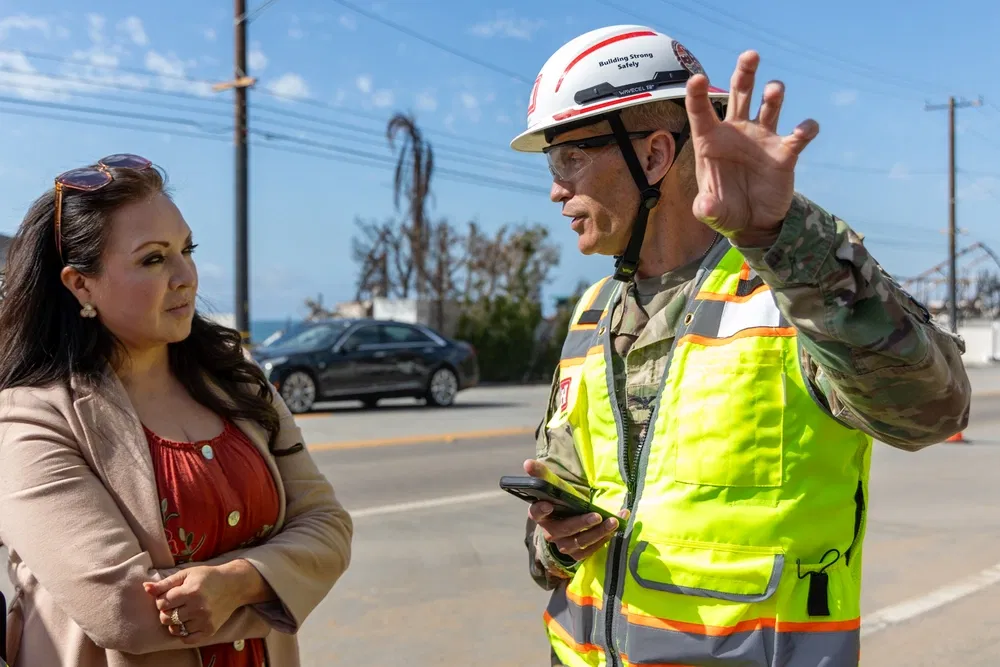
Director of Community Planning Yolanda Bundy talks all things rebuilding and permitting in Malibu
The Malibu construction permit process has “been complicated by design to slow development,” according to Abe Roy, the City Council’s liaison for those trying to rebuild in Malibu. However, speaking to the City Council on Aug. 25, Roy reiterated his central thesis: “We need to ‘uncomplicate’ it for fire rebuilds.”
We need to do so now, he emphasizes as he supports many residents who are struggling to go through the rebuild permitting process.
The state of play — crunching the numbers
Malibu lost a total of 720 structures in the Palisades Fire, including 322 coastal homes, Roy notes. Yolanda Bundy, Malibu’s director of community planning, shared details with The Malibu Times regarding the state of play concerning the processing of rebuild permit applications. Bundy stated that there are 128 pending permit applications, with 60 approved as to the plan review part of the approval process.
After plan review, applicants must go through building and safety reviews. “We have granted two construction permits — one for a beachfront property and another for a home on Big Rock,” she said. “We are working on a third permit in the Big Rock area and are waiting for its final stamps and we hope to grant that permit by the end of September.”
Bundy also discussed decisions made in recent city-sponsored meetings, all with an aim to streamline the permitting process.
“We invited representatives from the Structural Engineers Association of California, FEMA engineers and others in the building industry and we conducted an extensive technical meeting to assist the council by establishing geotechnical guidelines,” Bundy explained. “Engineers need to justify that plans will meet minimum safety standards and we are trying to be clear about the city’s standards.”
Bundy emphasized that the “city is committed to evaluate our plan approval process on an ongoing basis and to make upgrades to our rebuild portal so it is clear to the applicant what processes must be followed.” Elaborating, she said, “We have rolled out several standardized templates for homeowners and their architects to use which should facilitate faster permit checks.”
With regard to unique challenges faced by those rebuilding on coastal lots, Bundy noted that, “The normal practice is for geotechnical sites to be evaluated by structural engineers who assess whether the existing caissons can be preserved and reinforced or whether it is necessary to construct new caissons.”
Next, Bundy discussed the onboarding of Archistar, an AI plan-checking tool. “Archistar is in beta testing with the city and we hope to begin using that AI tool for processing permits in the planning process,” Bundy said. “Los Angeles County launched using that AI system on Sept. 2 and our staff is busy inputting our municipal code into our use of the system and we hope to roll that out soon.”
Overall, Bundy noted that streamlining the design-build process is a team effort and it is an “ongoing process.”
Impediments to rebuilding plan approvals
According to Roy’s data presented to the City Council on Aug. 25, as of Aug. 22, only 15.5% of those who lost a structure in Malibu in the Palisades Fire have started the permit application process, as opposed to 26.8% in the city of Los Angeles.
Although some of that delta can be explained by Malibu’s unique coastal topography and level of customization, Roy notes there still is a lot of room to improve the planning and building processes.
“We need to address the significant lag between step 1 in the review process, plan check, and step 2, building and safety checks.” Roy stated emphatically, opining that many of the impediments in step two are administrative and involve unnecessary red tape.
When The Malibu Times evaluated the processing of the recent plan approval for a home in Big Rock that received a permit to rebuild a home destroyed by the Palisades Fire, it turned out that the City of Malibu issued 123 comments in plan check. Whereas, according to architects familiar with the matter, on average in Los Angeles, only between 20 to 40 comments are given for constructing a single-family home.
Those familiar with the matter also note that such plan checks in Malibu are conducted by consulting plan checkers that are contracted with the city may have an incentive to generate more comments because they bill the city of Malibu by the hour for their services. “Certain things and notations made on permit applications in Malibu are not relevant to what happens in the field and to implementing building plans, especially on the geotechnical side,” one source familiar with the Malibu planning approval process noted, adding, as Roy also opines, “That’s what’s holding things up for those wanting to rebuild in Malibu.”
“We are significantly lagging behind the rate of permit issuance for the Woolsey Fire,” Roy told the City Council on Aug. 25. “Given the current pipeline and cadence — the goal of the city of Malibu to issue 32 building permits by Jan. 6, 2026, the one-year anniversary of the Palisades Fire — which appears challenging. This is despite faster debris clearance in the Palisades Fire.”
Roy acknowledges all the steps the city of Malibu has taken to help expedite rebuilding, including establishing the Rebuild Center, hiring extra staff and consultants, updating policy resolutions, providing informational sessions, and appointing him as the rebuilding ambassador, as well as establishing 12 zones involved in rebuilding and appointing zone captains. He notes those are all excellent steps.
However, he advocates that the city focus on rebuilds versus all other projects, expedite approvals for genuine like-for-like rebuilds, streamline the processes regarding the incremental steps in the rebuild permit approval process, and continue its efforts to assess what roadblocks that those who are rebuilding are encountering by discussing the most commonly recurring corrections.
“The city should reduce its dependency on consultants and should keep plan check engineering capabilities in-house for like-for-like and like-for-like-plus-10-percent rebuilds,” Roy advised. “This will lead to enhanced responsiveness, maintain continuity, and provide consistent quality standards.”
Further, Roy advocates that the city provide all corrections for a rebuild permit application in one review and he suggests that the city maintain more streamlined time goals to process applications. “A single review process minimizes iterative delays,” Roy noted. “That will enable faster decision-making and implementation.”
He also suggested that the city invite Los Angeles’ Department of Building Safety to share its approach and that Malibu tailor and customize its best practices to meet Malibu’s specific needs.
At Roy’s urging, the city established a system of zone captains to represent homeowners in each section of the Franklin and Palisades fires. On Sept. 8, as it does weekly, the city’s rebuild team met with zone captains seeking feedback regarding the rebuild process and providing assistance for those rebuilding. City staff shared information with homeowners about the city’s development portal tools, simplified planning materials and faster review processes.
Streamlining Malibu’s processing of rebuilding permit applications as much as possible will involve an ongoing narrative, Bundy and Roy both concede. They advise those who are affected to be vocal and involved.
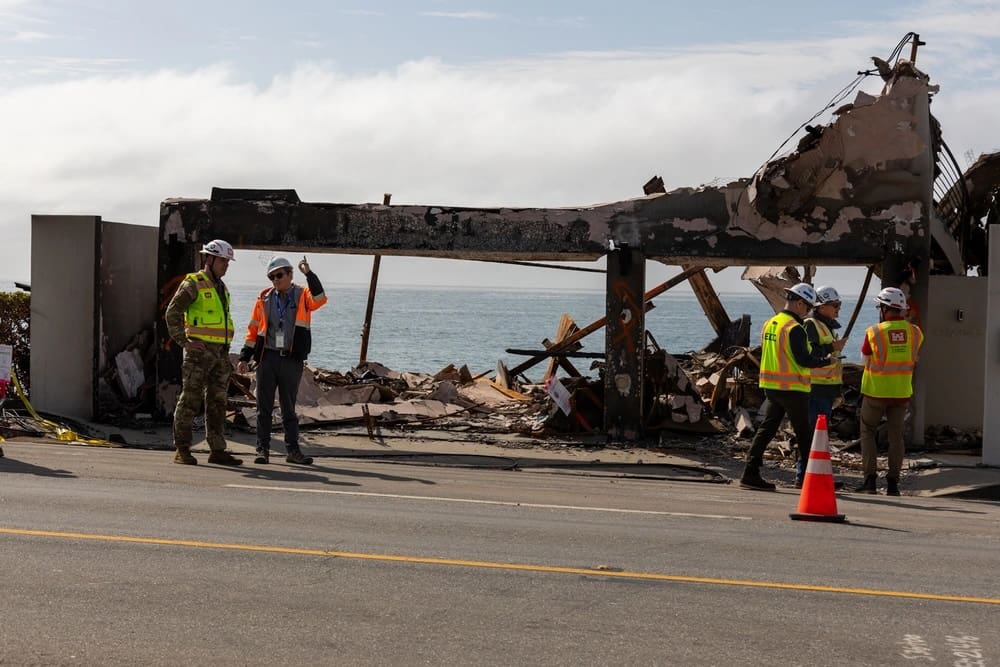
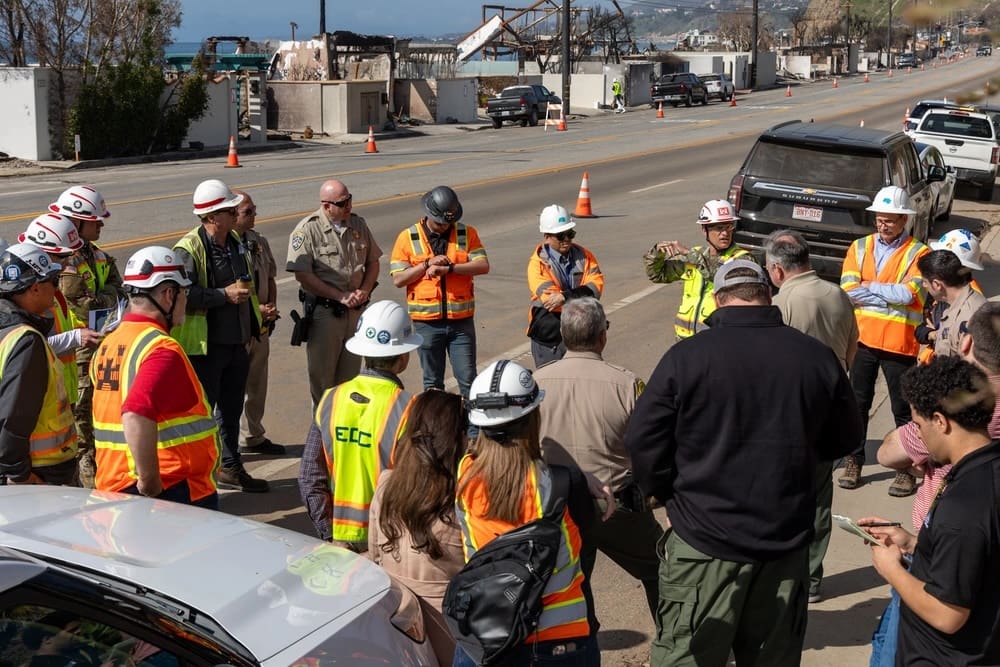
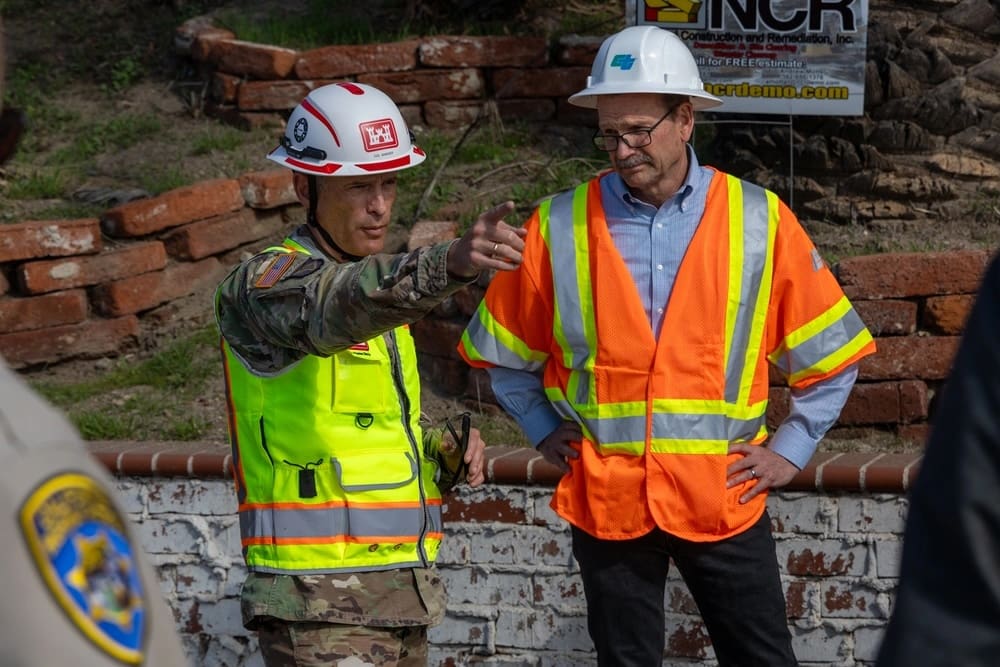
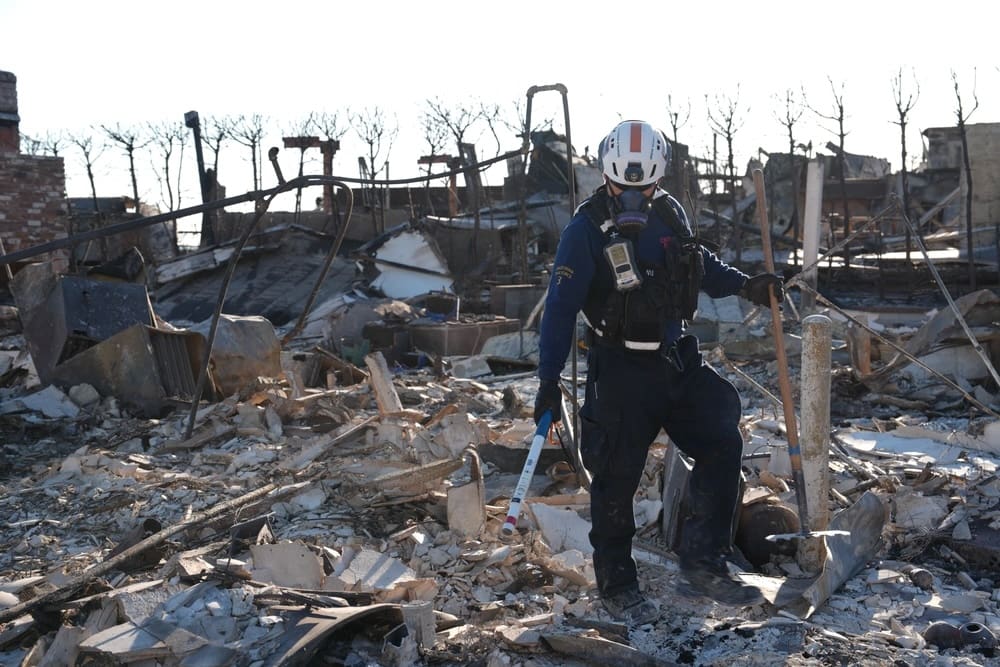
Members of a cleanup crew, led by Col. Brian Sawser (right), commander of the U.S. Army Corps of Engineers Emergency Field Office in Pacific Palisades, converse along Pacific Coast Highway during a cleanup effort on Feb. 28, almost two months after the Palisades Fire. Photo courtesy of U.S. Army Corps of Engineers, Travis England