Malibu, Pasadena settle SB 9 lawsuit, clearing way for added housing in fire zones
By The Malibu Times · Wed Aug 05 2026
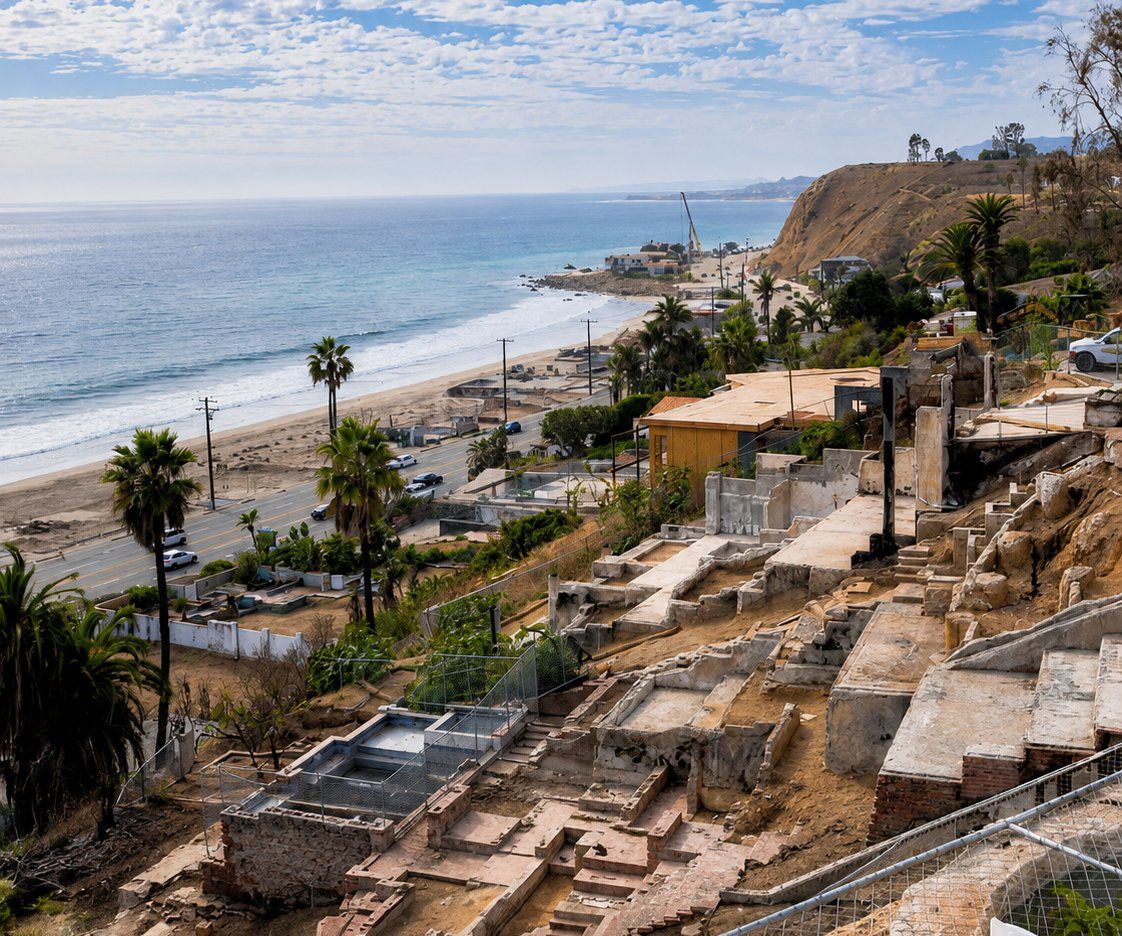
Homeowners rebuilding in areas devastated by the January 2025 Los Angeles County wildfires could regain the ability to divide residential lots and construct additional housing units after Malibu and Pasadena reached settlements in a legal battle over Senate Bill 9.
The settlements, reported in late July, require both cities to repeal local measures that suspended or prohibited SB 9 projects within areas affected by the Palisades and Eaton fires. The cities must also resume accepting and processing SB 9 applications, including applications that had previously been submitted, paused or rejected under the restrictions.
For Malibu, the agreement could have significant implications for homeowners rebuilding after the Palisades Fire, which destroyed hundreds of structures within the city.
Under the settlement, Malibu has until Sept. 29 to complete the repeal of its SB 9 restrictions. The change still requires action by the Malibu City Council.
Pasadena is moving through a similar process. The Pasadena City Council voted unanimously July 20 to begin repealing its restrictions, with the city expected to resume processing SB 9 applications once the repeal is finalized. City officials cited uncertainty surrounding the litigation as well as the amount of time that has passed since the Eaton Fire.
SB 9 at center of rebuilding dispute
California lawmakers approved SB 9 in 2021, with the law taking effect in 2022. The legislation allows qualifying property owners in single-family residential zones to construct two residential units on a parcel and, under certain conditions, divide the property into two lots.
Combined, the provisions can potentially allow as many as four residential units on property where local zoning previously permitted a single home. The law became part of a larger debate over rebuilding following the January 2025 Palisades and Eaton fires.
In July 2025, Gov. Gavin Newsom issued an executive order allowing local governments to restrict SB 9 projects within very high fire hazard severity zones located inside the fire burn areas. Los Angeles Mayor Karen Bass also took action affecting rebuilding within the City of Los Angeles.
Supporters of the restrictions argued that allowing additional residential density in neighborhoods already facing substantial wildfire risk could place additional pressure on evacuation routes and infrastructure as communities rebuild. Malibu, Pasadena, Los Angeles and Los Angeles County subsequently moved to restrict or suspend SB 9 applications in affected areas.
Lawsuit challenged emergency authority
The restrictions were challenged by housing advocacy organization YIMBY Law and other plaintiffs, who filed suit in late 2025 against Newsom, Bass, and the jurisdictions implementing the suspensions.
The plaintiffs argued that emergency executive authority could not be used to override a state housing law enacted by the California Legislature.
Housing advocates also argued that SB 9 could provide additional rebuilding options for homeowners struggling with the financial consequences of the fires. A homeowner, for example, could potentially construct another unit to generate rental income, accommodate family members or help finance reconstruction of the property.
The Malibu and Pasadena settlements resolve the claims against those two cities without resolving the broader legal question surrounding the governor's executive order.
As part of the agreements, the cities will again be required to consider qualifying projects under SB 9.
YIMBY Law Executive Director Sonja Trauss described the settlements as restoring the state housing law for residents who live in, want to live in or hope to return to the two communities, declaring that “SB 9 is back.”
What it means for Malibu
The settlement does not mean every Malibu residential property can automatically be divided or developed with four units.
Projects must still qualify under SB 9 and comply with applicable state requirements and allowable local development standards. Site-specific conditions, environmental regulations, coastal requirements, access, infrastructure, and other development rules may also affect what can ultimately be constructed.
However, Malibu will no longer be able to reject an otherwise qualifying SB 9 application solely because of the post-fire suspension once the city's repeal is completed.
The issue could become particularly important as Malibu continues its long-term recovery from the Palisades Fire. Many property owners are still navigating insurance settlements, financing, permitting and decisions about whether — and how — to rebuild.
Allowing additional units could give some homeowners another financial or family-housing option during that process, while also renewing longstanding concerns in Malibu about development density, wildfire evacuation and infrastructure capacity.
The settlements do not end the broader lawsuit. Challenges involving Los Angeles, including Pacific Palisades, and other defendants remain unresolved. Newsom's administration has indicated it intends to defend the governor's executive authority and the wildfire-related order.
The continuing case could ultimately determine a larger question for California: how far state and local officials can go in temporarily setting aside state housing requirements following a major disaster.
For Malibu, however, the immediate next step will be local.
The City Council must take the necessary action to repeal the city's SB 9 restrictions by Sept. 29 under the terms of the settlement. Once that process is completed, qualifying homeowners — including those rebuilding within the Palisades Fire burn area — will again be able to pursue projects under the state law.