Malibu families press for soccer fields as long-running lands project moves forward
By Hayley Mattson · Thu Oct 15 2026
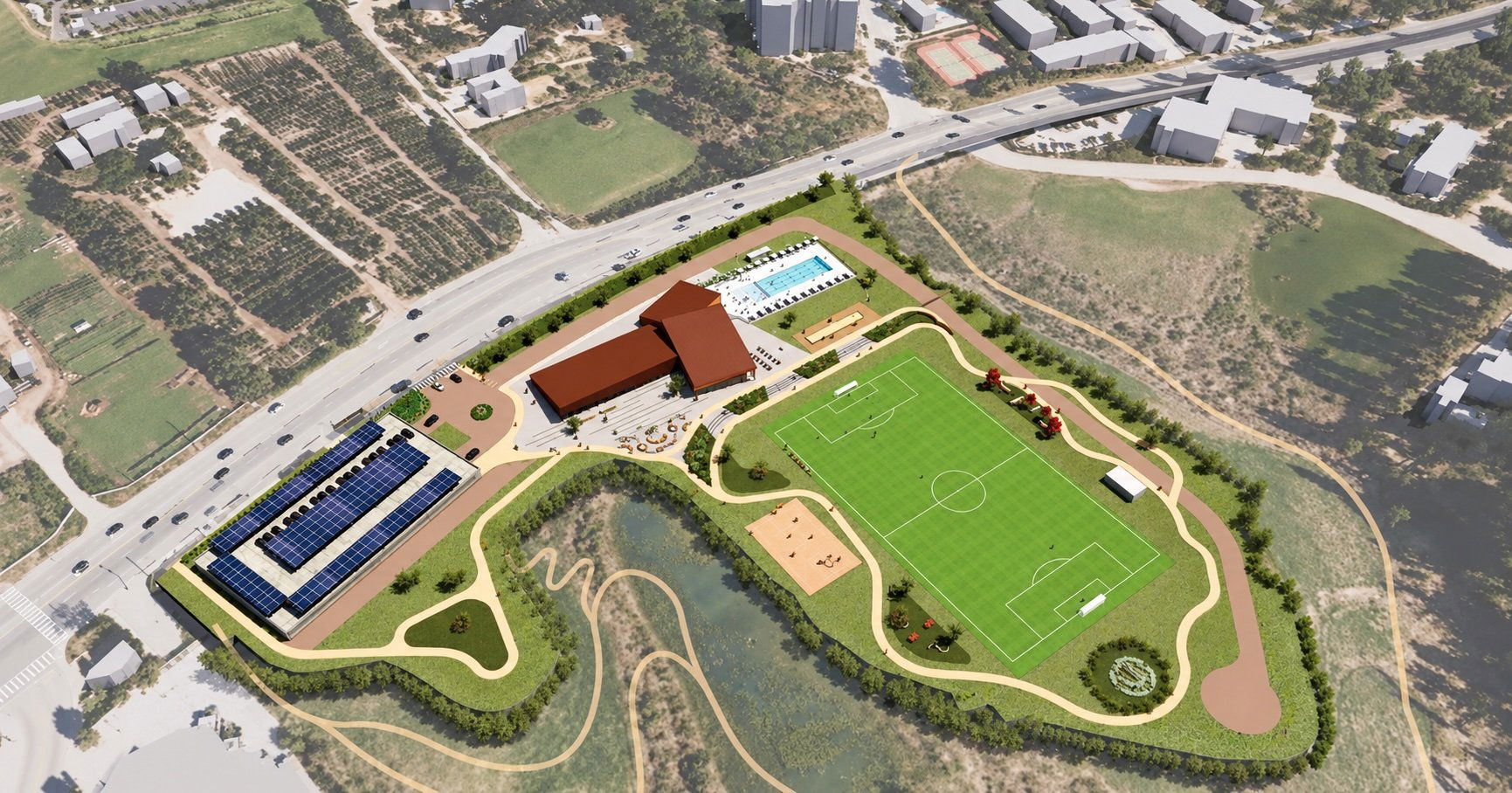
Plans for two permanent fields at the Ioki lot remain in place, but funding and an opening date are still unresolved
For Malibu children who practice soccer in baseball outfields and travel over the hill to play games, the question of new fields is a practical one: When will they have a place to play at home That question remains unanswered after the City Council’s latest discussions about the Ioki lot, where plans for two permanent multipurpose fields have advanced through design review but still lack identified construction funding. The proposal is part of Malibu’s Community Lands Project, an effort to determine how to use 61 acres of vacant city-owned land acquired in 2018. Eight years after that purchase, families are still asking the city to turn some of that land into usable recreation space.
Council approved moving forward with the permanent field design on Sept. 28, following appeals from children, parents, and coaches. Two weeks later, on Oct. 12, disagreements over costs and whether temporary fields could be built sooner brought the project back into council discussion.
A request to formally revisit the decision failed to gain sufficient support, leaving the permanent-field direction in place. But the discussion underscored the tension that has followed the project: how to provide facilities Malibu needs while managing costs, competing uses and the time required to build them.
Young players describe the wait
At the September meeting, Mayor Bruce Silverstein asked that children speak before council began questioning staff. The meeting had run late, and some young attendees had already gone home.
Those who remained described sharing space with baseball players and traveling outside Malibu for soccer.
“I really think that having a field would be better, ’cause now we don’t have to share with baseball,” said a young speaker identified as Dylan. “And now I can do more than one sport.”
Two 11-year-old players, each with six years of soccer experience, told council that playing in a baseball outfield was inadequate. They said new fields would reduce trips over the hill and give both soccer and baseball players more room for their own sports.
Another child asked for a soccer field where children could play and families could watch.
Their comments put a local face on the planning discussion. While council weighed designs and future uses, the children described the limitations they encounter each week.
Alicia Peak, who said she had served on the Parks and Recreation Commission and helped run Malibu’s AYSO soccer program, urged council to move forward with both proposed fields.
She described soccer players practicing in baseball and softball outfields, competing programs struggling to schedule field time and older teams without adequate space.
“Our multipurpose field at the Bluffs is not even regulation size to let that age practice,” Peak said of the under-19 program.
“We need a minimum of these two regulation-size fields,” she added.
Soccer coach George Carlson said his 12-year-old girls’ team played most of its games in Agoura because of the shortage of space. Older players, he said, could not play home games in Malibu.
“When we play in Agoura, we are grateful for their generosity, but it is not our kids’ hometown,” Carlson said.
He asked council to consider lighting so the fields could be used during shorter winter days and to keep the project moving by advancing design and engineering alongside geological studies.
Malibu Little League’s vice president also supported making Ioki an immediate priority. He described crowded afternoons and weekends at Malibu Bluffs Park and said additional fields would help multiple sports programs serve local children.
Years of planning, more work ahead
The current proposal followed several rounds of outreach and changing council direction.
Community engagement on the city’s lands began in 2024. That October, council endorsed a phased approach, initially prioritizing recreation options at Heathercliff and a performing arts center at Parcel C.
In January 2026, council directed staff and the Public Parks and Property Ad Hoc Committee to bring back a plan for temporary sports fields at Ioki, specifically including soccer fields.
Staff, design consultants, and councilmembers Marianne Riggins and Haylynn Conrad subsequently developed preliminary concepts. The Parks and Recreation and Public Works commissions reviewed the proposals over the summer, and the city collected additional feedback through an online survey.
By September, the recommendation before council had shifted to two permanent multipurpose fields.
Community Services Director Kristin Riesgo said discussions with local soccer groups identified a need for regulation-size fields and more access for older athletes. Existing space is particularly limited after 3 p.m. and on weekends, while Little League use and periodic field renovations further restrict availability at Malibu Bluffs Park.
The Ioki concept includes restrooms, storage, parking, seating, a walking and jogging path, and a sidewalk along Stuart Ranch Road. Staff said the fields could accommodate soccer, flag football, ultimate Frisbee, grass volleyball, special events and recreation programs for different ages.
The September presentation placed the approximate cost of the permanent fields and amenities at $4 million, with annual operations and maintenance expenses of $550,000, excluding personnel.
Staff also made clear that the designs were preliminary and funding for engineering and construction had not yet been identified. Approval of the concept established a direction for the project; it did not establish when families could begin using the fields.
Cost questions divide council
On Oct. 12, Councilmember Steve Uhring asked council to bring the item back for another review after receiving a cost comparison he said changed his understanding of the options.
Uhring said he had voted for permanent fields because he understood temporary and permanent facilities would cost the same. He said subsequent information indicated a difference of roughly $2 million to $3 million.
“I want to ask right now that what we do is we bring that item back,” Uhring said. “We bring back the cost estimates, and let’s take a look at it.”
Other council members disputed his recollection of the September discussion. They said temporary fields had beendescribed as expensive because the sloped lot would still need grading, irrigation and other improvements to make it suitable for play.
The exchange included estimates of approximately $1.2 million to $1.8 million for temporary fields, with disagreement over which amenities were included.
Uhring argued that a simpler approach could save money and provide fields sooner. Supporters of permanent facilities argued that Malibu should build quality recreation space and that essential site work would be required under either option.
Councilmember Doug Stewart said he was willing to review the information quickly, although he remained comfortable with the earlier decision.
Silverstein, who opposed the September approval and had criticized the departure from January’s direction for temporary fields, declined to support another discussion because he did not expect the outcome to change.
The request failed to gain sufficient support, and the council moved on.
A place for the community
Residents’ September comments also described what new facilities could mean for a community that has endured repeated disasters.
Wade Major recalled how ballfields near Malibu’s commercial center once brought families together and connected them with local businesses. He said centrally located recreation facilities could help rebuild those connections and give residents something to look forward to.
Other students reminded council that the need for local activities extends beyond sports. Malibu High School junior Sarah Barron asked for more opportunities in theater, music, and community programs, including temporary space while larger projects are planned.
Those requests reflect the broader challenge facing the Community Lands Project: residents want places to gather and activities close to home, while the city continues working through what it can build and afford.
For the soccer families who came to council, the immediate need was clear. Children are playing now, teams need space now, and another season will arrive whether the fields are ready or not.
The permanent-field plan remains the city’s direction. Financing, further project development and a construction schedule remain unresolved.