Driving Change: What Hoboken knows that Malibu won't admit
By Michel Shane · Thu Feb 19 2026
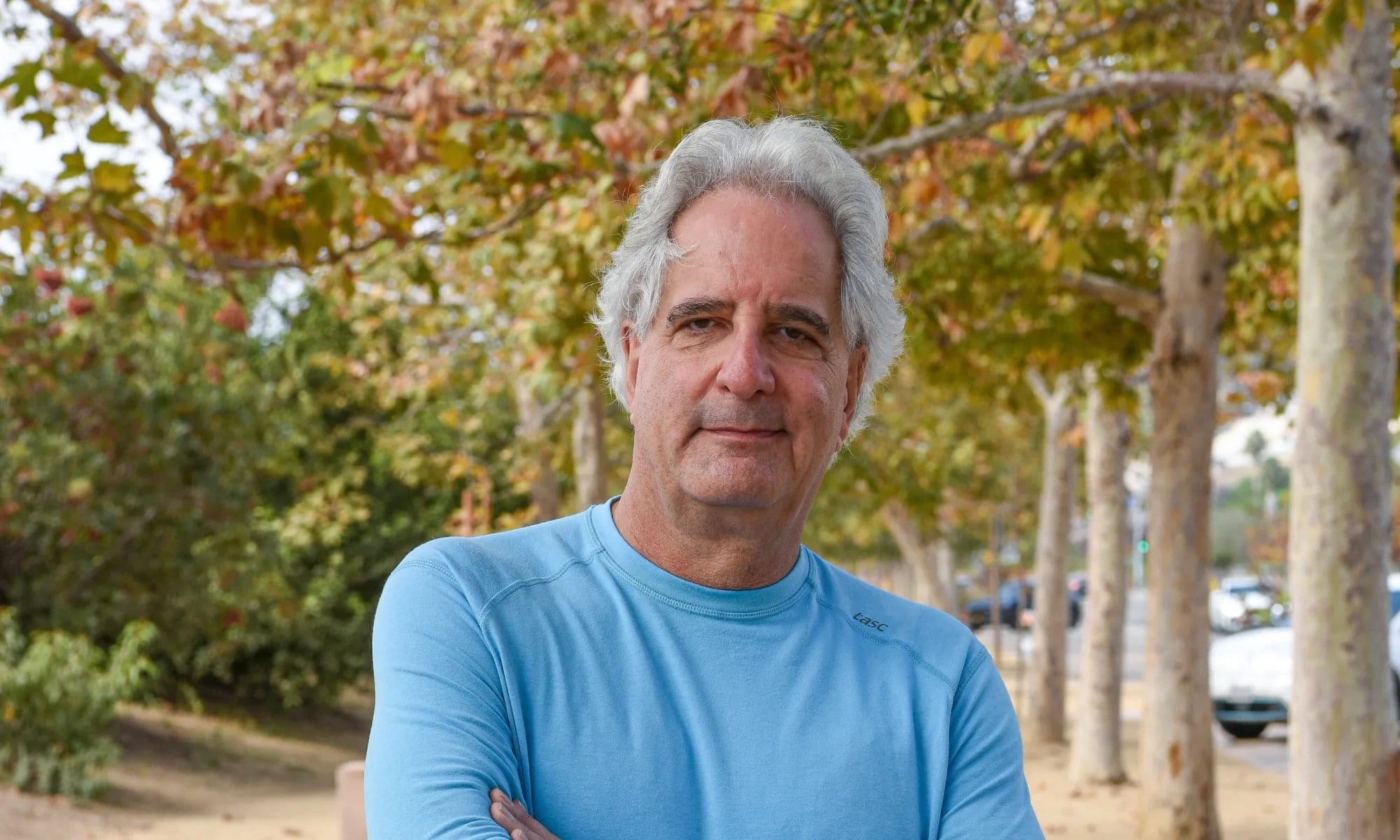
By Michel Shane, Opinion Columnist
Two weeks ago, a man experiencing homelessness was walking along Pacific Coast Highway in the pitch black. The driver who hit him wasn't speeding or reckless; they simply couldn't see him.
Caltrans originally planned to install lights at that location as part of its $55 million paving/safety project. During the appeal, a group fought to remove them to preserve our "Dark Sky" ordinances. Caltrans complied. It saved them money. At that unlit location, a man was walking in the pitch black. The driver couldn't see him.
Two days later, a 16-year-old boy drove over Malibu Canyon Road. He made a mistake, the kind a teenager makes. In a forgiving city, that mistake results in a dented fender. In Malibu, it results in a funeral.
Two families will never be whole again. Since 2010, 62 families have been shattered. Since 1975, 205 families. These aren't statistics; they are the "Empty Chair Club," a group that grows when we prioritize what we want to see over who we need to protect.
The irony that should break us
Two weeks ago, we marked the debut of 12 synchronized traffic lights. The project was bogged down in bureaucracy for nine years before completion. Throughout those years of "careful consideration," 40 lives were lost.
The timing reveals our failure. The same week we finally celebrated completing one safety project, two more people died on our roads. Not because synchronized lights would have saved them, but because we spent nine years on one solution and refused to test others. We celebrate synchronized signals while families synchronize their grief.
The truth from the East Coast: Nine years. Hoboken: Zero deaths. Malibu: 40
While we offer thoughts and prayers, Hoboken, New Jersey, offers life. Hoboken hasn't lost a single person to traffic violence in nine years. Not one mother is burying a child. Not one 2 a.m. knock from a deputy.
They didn't succeed because they had advantages we lack. They succeeded because they refused to accept that the next death was inevitable. They redesigned their roads so that when a human makes a mistake, the road doesn't execute them for it.
Hoboken is not an anomaly. Cities across America are proving that zero is achievable. Winterville, North Carolina, our exact size, installed "Quick Build" safety improvements almost overnight. Cambridge, Massachusetts. Anacortes, Washington. These cities have something we've lost: the belief that we can be better than we are.
The fantasy vs. the physics
We are paralyzed by fear dressed up as preservation. Fear of narrowing a highway for an 18-month pilot test, a temporary experiment to learn what works. Fear of compromised evacuations, though vehicles can drive over roundabouts during emergencies. But these fears ignore our reality: a road constantly closed for hours because of fatal accidents. What is worse for evacuation? A modern roundabout that keeps traffic flowing, or a forensic investigation over a body bag?
The physics of a roundabout don't care about our anxieties. You can't blast through a roundabout at 60 mph. It forces a physical change in behavior that a sign never will. Any collision occurs at low speeds and shallow angles. The kind where you go home to your family instead of being carried by them to a grave.
The courage of pier to pier
We are told change is impossible, yet the "Blue Highway" proves otherwise. Pier to Pier, a private group partnering with government, is forging a path using the ocean because the land is bogged down in "no."
The Blue Highway has momentum because someone dared to believe it could be done, despite every voice saying it couldn't. They saw the timing and moved. Why can't we apply that same courage to our pavement? Why are we so afraid of an 18-month test that might save the next 16-year-old?
Three years until judgment
The world is coming: the World Cup, the Super Bowl, and the Olympics. For three years, the eyes of the planet will be on PCH. Visitors will drive this road and see exactly who we are.
Will they see a community so paralyzed by fear that we let 62 people die rather than test a solution? Will they see a place where we fought for darkness, even when it meant a man couldn't be seen? At our current rate, 36 more families will join the Empty Chair Club by 2030. That's not a prediction; it's math.
One Question
My daughter, Emily, died at Heathercliff and PCH in 2010. She was 13. That intersection bears her name now.
Sixteen years later, we are still "planning." While we debate, loved ones are dying on roads that will welcome millions of visitors over the next three years. If Emily could ask us one question, I know what it would be:
"You knew how to save me, and you didn't. You know how to save the next child, and you won't. What are you so afraid of that death is preferable?"
We have the tools. We have the proof from Hoboken and the Pier-to-Pier innovation. We have three years until the world watches us choose.
I ask one question and one question alone: If the 63rd family that dies on PCH is yours, will you still believe we tried everything?
The next death is preventable. And if we refuse to even test a solution, we are choosing to let it happen.
The choice is ours.
I can be reached at 21milesinmalibu@gmail.com