New documentary raises hard questions about the Palisades Fire
By Judy Abel · Wed Jan 07 2026
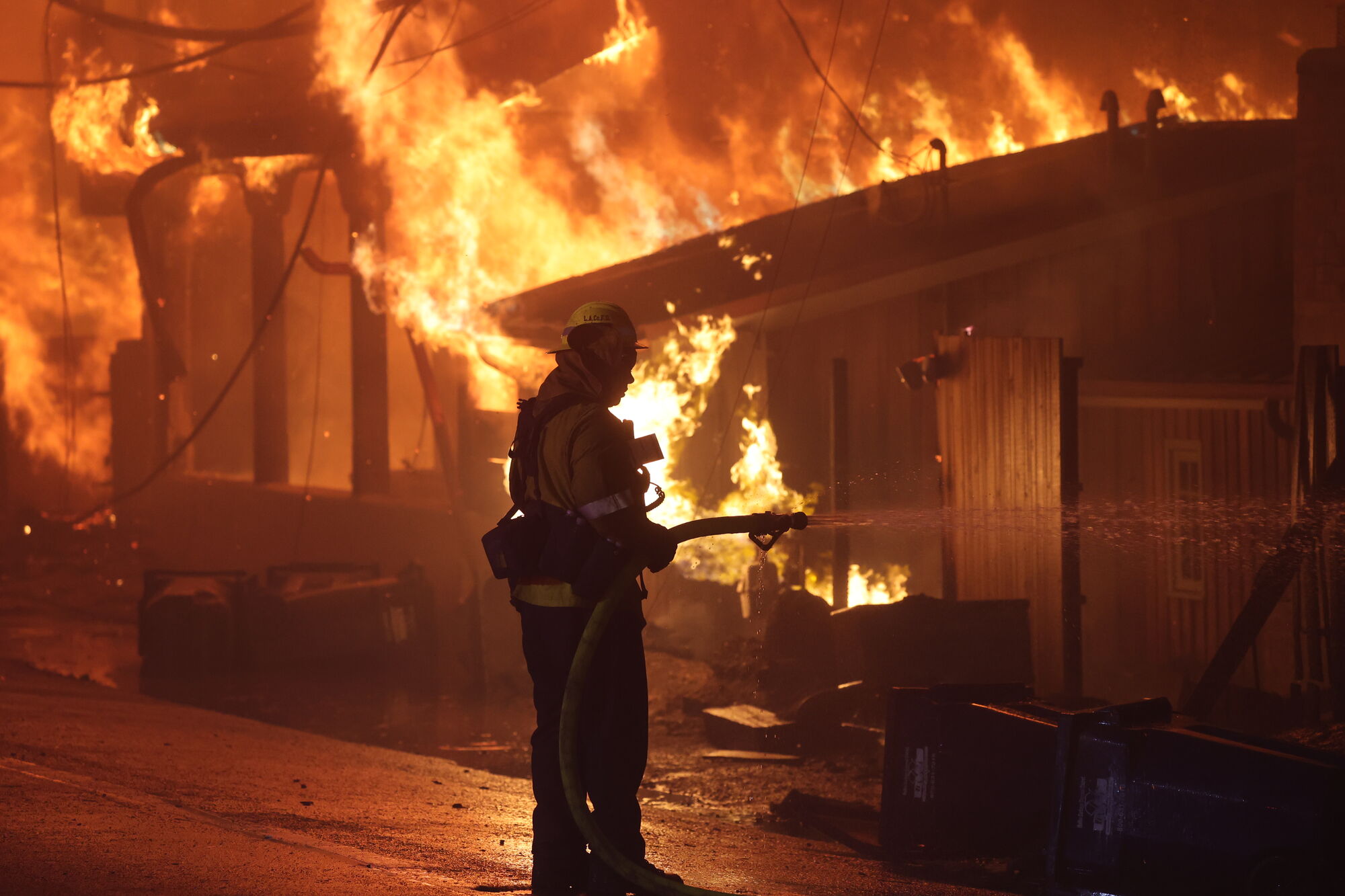
Filmmaker asks 'What happened on day two?'
In the midst of a series of blistering articles published in the Los Angeles Times revealing watered-down revisions to the Los Angeles Fire Department’s after-action report on the deadly Palisades Fire, it comes as no surprise that the City of Los Angeles is facing intense public scrutiny. Now, nearly a year after the cataclysmic Palisades Fire reshaped one of Los Angeles’ most historic neighborhoods and then continued to change the face of Malibu, wiping out more than 700 homes, a new independent documentary is reigniting a debate many residents say never truly ended: Why were so many homes lost after the fire’s first day — and why has there been so little transparency from the Los Angeles Fire Department about what happened next?
The 22-minute film, “The Palisades Fire: They Gave Up,” was released on YouTube earlier this month by filmmaker Rob Montz, CEO of Good Kid Productions. The documentary has already drawn roughly 50,000 combined views across two channels and is generating renewed scrutiny of official narratives surrounding the January fire.
Montz, 42, is not a detached observer. He grew up in Pacific Palisades, where his family moved in the mid-1980s, and his mother’s home — owned for roughly 40 years — burned to the ground. Though Montz now lives on the East Coast, his personal connection to the neighborhood fuels the film’s urgency and emotional weight.
“This is the motherland for me,” Montz said. “When the fire happened, it felt like there was an alignment between what the universe needed — a rigorous investigation into what went wrong — and the skill set that I have.”
While much of the public coverage of the Palisades Fire has focused on extreme weather, climate change and heroic firefighting efforts, Montz’s documentary zeroes in on a largely unexamined period: the second day of the fire. According to the film, approximately 1,000 structures were still standing after day one — only to be lost by the end of day two.
The film’s central, unsettling question is simple: why?
“What got ignored or underreported was what happened on day two, when the Palisades was functionally abandoned,” Montz said. “There were a lot of homes that were self-evidently savable.”
The documentary combines timeline reconstruction, aerial footage, on-the-ground visuals, and Palisades residents’ testimony to argue that firefighting efforts were dramatically reduced on the second day, even as conditions suggested, according to the filmmaker, many homes could still have been protected. Montz contends that residents who defied evacuation orders and returned to the area were able to save homes themselves — underscoring, in his view, that the destruction was not inevitable.
Perhaps most striking is what the film says is missing, echoing the LA Times: clear answers from authorities.
Montz said repeated attempts to interview firefighters and officials were met with silence or deflection. Requests were routed to media relations representatives, calls went unanswered, and potential sources “ghosted” after seeking approval from supervisors.
“That’s really the most frustrating part,” Montz said. “There has been no real transparency or accountability about what happened on day two.”
This lack of explanation, he argues, has created a growing rift between Palisades residents and the fire department.
“There was enormous heroism,” Montz emphasized. “But for the people who live there, they also saw firefighters stop fighting fires on day two. And they want to know why.”
Montz also questions how quickly city leadership has pivoted toward rebuilding narratives without fully addressing the causes of the destruction. He points to official messaging that frames the fire as unavoidable — a product of climate change or bad luck — and says residents do not accept that explanation.
“They shouldn’t buy it,” he said. “Because it’s not true.”
The documentary arrived during the holiday season when the Palisades and Malibu remains scarred physically and emotionally. Montz describes returning for Thanksgiving as surreal, likening the landscape to “World War II Dresden, but with perfect weather.” His childhood home remains a flattened dirt lot.
His mother is among a shrinking group of long-time residents trying to rebuild. Many others, Montz said, were underinsured or uninsured and have been forced to sell their lots and leave the area. The film challenges perceptions of the Palisades as uniformly wealthy, emphasizing that a significant share of homeowners were middle-class families whose primary asset was their home.
“The Palisades Fire: They Gave Up” may eventually include a Part 2. Interest in a follow-up is growing, and Montz hopes future installments can answer the questions the first film could not: who made the decisions on day two, and why?
“The Palisades Fire: They Gave Up” is available for free on YouTube.